
To personalize cold messages effectively, you must connect your specific offer or request to a verifiable pain point, recent achievement, or public statement made by the recipient. Effective personalization moves beyond basic mail-merge variables like name or company and instead demonstrates that you have researched the recipient’s current context. This approach works because it signals relevance immediately, bypassing the mental filters most professionals use to ignore generic outreach.
True personalization requires identifying a “trigger event” or a specific relevance signal before drafting the message. This signal serves as the bridge between the recipient’s world and your value proposition. By referencing a specific podcast appearance, a recent funding round, a hiring surge, or a published article, you prove that the message was written for them specifically, rather than sent to a mass list. This significantly increases the probability of a response by triggering the reciprocity principle, the recipient feels compelled to pay attention because you invested effort in understanding them.
You can explore how recruiters respond to personalized outreach at scale to understand the broader context behind this approach.
Why relevance matters more than friendliness in cold outreach
The mechanics of relevance in outreach
Personalization is often misunderstood as simply being “friendly” or using the recipient’s first name. However, in the context of professional communication, personalization is a mechanical process of matching a solution to a specific, observed problem. When a cold message fails, it is usually because the sender focused on their own desire (to get a job, to sell a product) rather than the recipient’s current reality.
The cognitive mechanism at play here is “pattern interruption.” Hiring managers and decision-makers see hundreds of emails that follow identical templates. These messages are processed by the brain as noise. A personalized message breaks this pattern by introducing unique, specific data points that force the brain to engage. For example, referencing a specific quote from a recent interview the recipient gave shifts the categorization of the email from “spam” to “correspondence.”
Research into digital communication suggests that the depth of personalization correlates directly with response rates. It is not enough to know who the person is; you must know what they are currently doing. This involves a research phase where you scan public channels for recent activity. The goal is to find a “hook”, a piece of information that makes your outreach timely.
Common misunderstandings about personalization
A frequent error is confusing personalization with familiarity. Personalization creates relevance; familiarity assumes a relationship that does not exist. Using overly casual language or asking about personal weekends in a first interaction is often perceived as manipulative or unprofessional.
Another misunderstanding is the belief that every sentence must be unique. In practice, effective personalization often involves a hybrid approach known as “templated personalization.” In this model, the core value proposition and call to action remain consistent across similar prospects, while the opening hook, the first 20% of the message, is hyper-customized to the individual. This ensures scalability without sacrificing the relevance signal that drives engagement.
According to research published by the Harvard Business Review, tailored communication that demonstrates an understanding of the recipient’s specific needs significantly outperforms generic broadcasting. The study highlights that the quality of the specific insight used to tailor the message is the primary driver of success, rather than the length or creativity of the copy itself.
The role of data in customizing outreach emails
Successful customization relies on accurate data. If you personalize a message based on outdated information, such as congratulating someone on a role they left three months ago, the attempt backfires. It demonstrates a lack of diligence. Therefore, the foundation of personalization is not writing, but verification.
You must verify that the trigger event is recent and relevant. For example, if a company announces a layoff, pitching a recruitment service immediately is relevant but potentially tone-deaf if not handled with extreme care. If a company announces a new product launch, that is a positive trigger event that invites congratulations and creates a natural opening for conversation.
How to personalize cold messages without crossing boundaries
When personalization is safe and effective
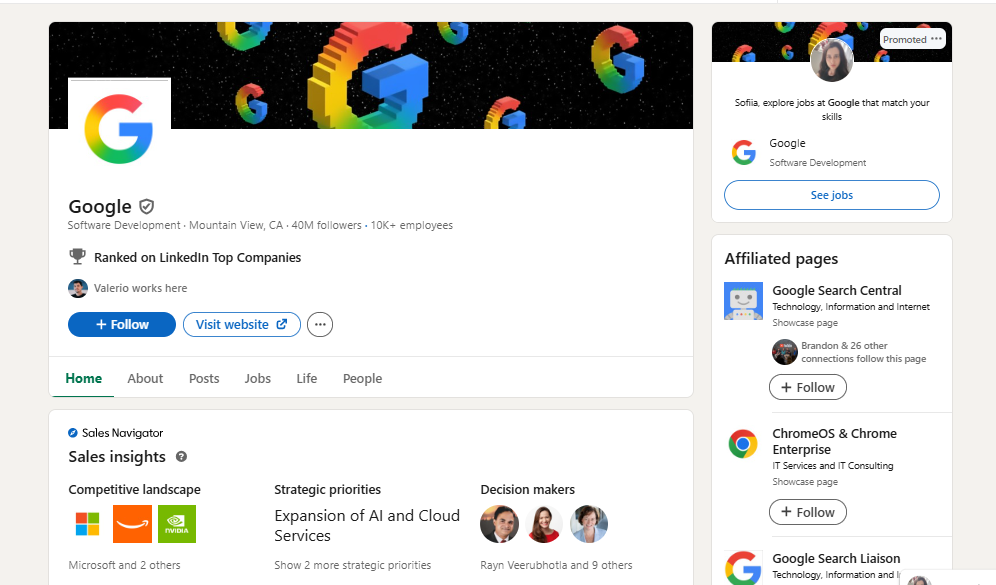
Personalization is most effective when it relies on professional, public information. It is safe to reference anything the recipient has published on LinkedIn, discussed in a webinar, or released via official company channels. These are public artifacts intended for consumption, and referencing them validates the recipient’s work.
It is also effective to personalize based on shared professional overlap. Mentioning a mutual connection (with permission), a shared alma mater, or membership in the same professional organization establishes immediate social proof. This form of cold outreach tailoring reduces the perceived risk of engaging with a stranger because it anchors the interaction in a known community.
Safe data points for personalization:
- Recent promotion or job change.
- Company funding news or acquisition.
- Articles written or shared by the recipient.
- Comments left on industry discussions.
- Specific challenges mentioned in job descriptions (e.g., “I saw you are looking for someone to manage migration to X software”).
This approach helps personalize cold messages without sounding generic or intrusive.
When personalization becomes risky
Personalization becomes risky when it crosses the boundary into private life. Referencing information found on personal social media accounts (like Facebook or Instagram) that are not strictly used for professional purposes is generally considered intrusive. Even if the information is technically public, using it in a professional cold message violates social norms and can trigger a defensive reaction.
Avoid “pseudo-personalization,” which involves using generic compliments that could apply to anyone. Phrases like “I love your work” or “Big fan of what you do” without specific examples are easily identified as insincere. They waste the recipient’s time without offering value.
Risky data points to avoid:
- Family details or photos.
- Home address or non-business location data.
- Hobbies unrelated to professional context (unless clearly listed on a professional profile).
- Political or religious views.
What to do if personalization is not appropriate
There are scenarios where deep personalization is not possible or appropriate, such as when contacting a high-volume list of prospects where public data is scarce. In these cases, do not fake personalization. Instead, rely on “persona-based relevance.”
Persona-based relevance involves addressing the specific problems common to that job title or industry, rather than the specific individual. For example, rather than referencing a specific post a CTO wrote, you might address the universal challenge of technical debt that most CTOs face. This approach respects the recipient’s time by getting straight to the value proposition without a forced or weak attempt at bonding.
FAQ: How to personalize cold messages effectively
1. Does personalizing cold messages increase response rates?
Yes, data consistently shows that personalized messages receive higher response rates than generic templates. By demonstrating relevance and effort, you differentiate your message from mass-automated spam, making the recipient more likely to read and reply.
2. How long should a personalized section be?
The personalized section should be concise, typically consisting of one or two sentences at the very beginning of the message. This “hook” should immediately transition into your value proposition to respect the reader’s time while establishing context.
3. Can I use AI to personalize cold messages?
Yes, AI tools can help identify relevant public data points and draft initial hooks, but human review is essential to ensure accuracy and tone. Automated personalization without oversight can lead to awkward phrasing or “hallucinated” details that damage credibility.
4. Is it better to personalize the subject line or the body copy?
It is effective to personalize both, but the opening line of the body copy is the most critical factor for retention. While a personalized subject line gets the email opened, the first sentence determines whether the recipient continues reading or deletes the message.
Focusing on relevance and clear value alignment helps clarify when personalization is worth the effort.