

Let’s be honest: getting rejected from job after job hurts. It’s a heavy blow that can chip away at your professional self-esteem.
You start questioning your skills, your experience, and even your worth. It’s easy to fall into a spiral of negative self-talk and wonder,
“What’s wrong with me?”
But here’s the truth: job rejections are not a reflection of your value. The modern job search process is often broken, incredibly noisy, and more competitive than ever. A rejection doesn’t mean you’re unqualified; it often means you were one of hundreds, sometimes thousands, of applicants in a system not designed for nuance.
You are not alone in this feeling. Most job seekers face dozens of rejections before landing an offer. The key isn’t to avoid rejection, it’s to learn how to manage it, learn from it, and keep moving forward with your head held high. Your ability to rebuild confidence is one of the most critical skills in your career toolkit.
So how do you stay motivated and resilient when the rejection letters keep piling up? Let’s break it down into actionable steps you can take today.
1. Understand that rejection isn’t always personal
The first step to bouncing back is to depersonalize the rejection. It’s rarely about you as a person or even as a professional. Many factors that lead to a “no” are completely outside of your control. According to hiring experts at publications like Forbes, companies receive an average of 250 resumes for each corporate job opening, making it impossible to review every single one with care.
Many companies don’t even review every resume submitted. Here are a few common scenarios that happen behind the scenes:
-
The role was filled internally: A strong internal candidate was already earmarked for the position.
-
The budget was frozen: The company’s financial priorities shifted, and the role was put on hold indefinitely.
-
The job description changed: The team’s needs evolved, and your profile was no longer the closest match.
-
The position was a “ghost job”: Some companies post jobs to gauge the talent market or build a candidate pipeline with no immediate intent to hire.
The role of Applicant Tracking Systems (ATS)
Another major factor is the Applicant Tracking System, or ATS. This software is used by over 98% of Fortune 500 companies to scan and filter resumes before they ever reach a human. If your resume isn’t formatted correctly or lacks specific keywords from the job description, the ATS will likely discard it automatically. You could be the perfect candidate, but a machine might prevent a hiring manager from ever discovering you.
Your value doesn’t decrease just because someone or something, didn’t recognize it.
Tip: If you made it to the interview stage, that’s a strong signal you’re doing something right. You passed the initial screening and impressed someone enough to warrant a conversation. Don’t let one “no” erase all the progress you’ve made. Your interview preparation got you in the room; now it’s just about finding the right room.
2. Use rejection emails to your advantage
Your first instinct might be to archive or delete a rejection email and try to forget about it. Resist that urge. Instead of just moving on, take a moment to reply. A brief, professional, and gracious response can turn a closed door into a future opportunity.
Why? Because it shows professionalism, maturity, and genuine interest in the company. Recruiters remember candidates who handle rejection with class. It keeps you on their radar for future openings.
Here’s a simple template you can use:
Template 1: The classic thank you
Hi [Hiring Manager/Recruiter Name],
Thanks so much for letting me know. I genuinely appreciate the opportunity to interview with the team and learn more about [Company Name].
If any similar roles open up in the future, I’d love to be considered. Wishing you and the team all the best in finding the right candidate.
Best regards,
[Your Name]
This small step leaves a lasting positive impression and costs you nothing. Here are two alternative templates for different situations.
Template 2: The enthusiastic follow-up (after a great interview)
Hi [Interviewer Name],
Thank you for the update. While I’m disappointed to hear I wasn’t selected, I sincerely enjoyed our conversation about [mention a specific topic, like the company’s new project or team culture].
My enthusiasm for [Company Name]’s mission remains strong. Please keep me in mind for future opportunities, as I am confident I could bring value to your team.
All the best,
[Your Name]
Template 3: The networking follow-up (connecting on LinkedIn)
Hi [Recruiter Name],
Thanks for following up. I understand and appreciate you letting me know.
I’ve just connected with you on LinkedIn to stay in touch. I’m a great admirer of the work [Company Name] is doing in [Industry/Field], and I hope our paths cross again.
Sincerely,
[Your Name]
A few weeks or months later, you can even re-engage with that contact to inquire about new roles. A simple check-in shows you’re still interested and proactive
3. Track your wins (yes, even the small ones)
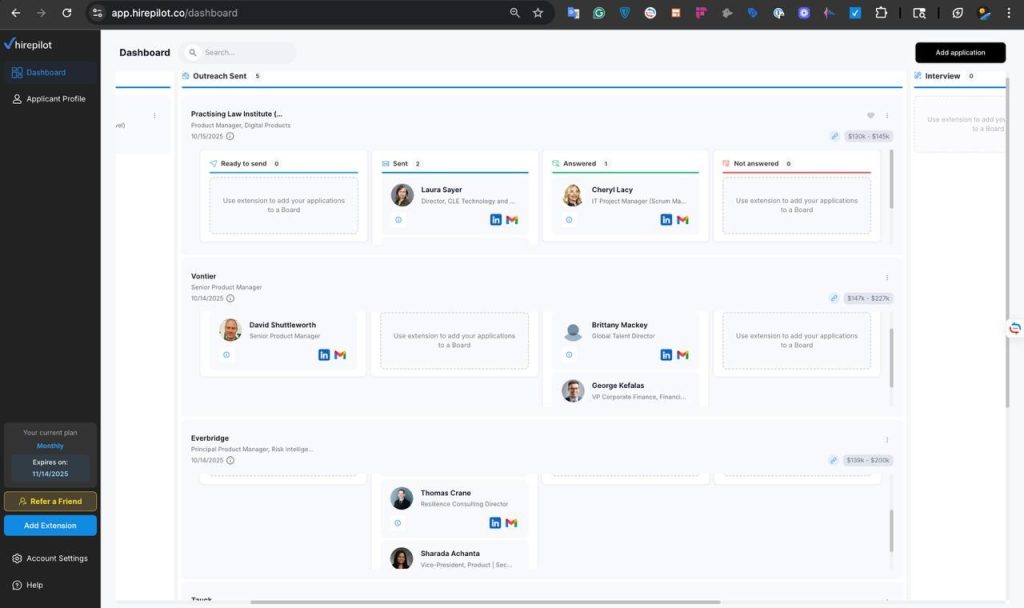
In a rejection-heavy environment, your confidence will inevitably fade unless you actively work to maintain it. The best way to do this is to track your progress and celebrate your wins, no matter how small they seem. Your brain needs proof that you are moving forward. For more strategies, read Indeed’s guide on how to stay motivated during a job search, it breaks down practical ways to stay consistent and positive while applying.
Focus on the process, not just the outcome. Progress equals confidence. Even if you’re not getting offers yet, you’re building momentum.
Here are some concrete things you should be tracking:
-
Applications sent: Note how many tailored applications you completed.
-
Resume/cover letter improvements: Did you optimize your resume with new keywords? Track it.
-
Networking connections: How many new people did you connect with on LinkedIn?
-
Recruiter responses: Did a recruiter reply to your message? That’s a huge win!
-
First interviews: Each one is a validation of your profile.
-
Skills learned: Did you complete a short online course or read a book to sharpen your skills?
Create a simple weekly review ritual. Every Friday, open a document and log your accomplishments. A sample progress log might look like this:
-
Week of October 20th:
-
Sent 8 tailored applications for Product Manager roles.
-
Updated my resume to include metrics from my last project, improving my ATS keywords.
-
Connected with 5 new recruiters at target companies.
-
Received 1 positive reply from a hiring manager on LinkedIn.
-
Scheduled 1 phone screen for next week.
-
Seeing this progress written down provides tangible evidence that your efforts are not in vain. It reframes the job search from a series of rejections to a journey of continuous improvement.
Need help staying organized? A dedicated job application tracker can automate this process, helping you manage applications, follow-ups, and contacts in one place, giving you a clear view of your momentum.
4. Stop trying to “win” with the perfect resume
Many job seekers get stuck in the “resume perfection” trap. They spend countless hours endlessly tweaking fonts, colors, and phrasing, hoping that a flawless document will guarantee success.
Here’s a crucial mindset shift: what works is relevance, not perfection. Your resume isn’t a biography; it’s a marketing document designed to solve a specific company’s problem with your skills. The goal is to be the most relevant applicant, not the one with the fanciest resume.
Instead of chasing perfection, focus on these three core pillars of relevance:
-
Match the job title and keywords: Your resume should mirror the language of the job description. If the role is for a “Senior Content Strategist,” your headline should say “Senior Content Strategist,” not “Marketing Communications Expert.” Weave in keywords related to the required skills and responsibilities to get past the ATS.
-
Highlight clear, quantified results: Don’t just list your duties; showcase your impact. Replace vague statements with concrete achievements. Instead of “Managed social media accounts,” write “Grew social media engagement by 45% in 6 months by implementing a data-driven content strategy.”
-
Keep the format clean and scannable: Recruiters spend only a few seconds on each resume. Use clear headings, bullet points, and plenty of white space. A simple, professional format is always better than a cluttered, overly designed one.
Not sure what to change or how to highlight your impact? This resume guide explains why the “perfect resume” doesn’t exist and what to focus on instead.
5. Rebuild from a place of curiosity

When rejection hits hard, it’s natural to feel frustrated or defeated. Instead of letting those feelings take over, take a brief pause and approach the situation with curiosity. Curiosity softens the blow of rejection and transforms it from a painful endpoint into valuable feedback.
Ask yourself reflective questions to guide your job search strategy:
-
Which parts of the interview process felt energizing? Which parts felt draining?
-
What roles or companies actually excited me the most? Why?
-
Did any job titles or responsibilities feel “off” or unaligned with my long-term goals?
-
What questions do I wish I had asked? What do I wish I had said differently?
-
What skills gaps did this process reveal?
This isn’t about blaming yourself; it’s about gathering data. Each application and interview is a learning opportunity. Perhaps you discovered you thrive in smaller, collaborative teams, or that you need to strengthen your interview preparation for behavioral questions.
One of the most powerful strategies that stems from curiosity is reaching out before applying. Networking and informational interviews can provide invaluable insights and help you get your foot in the door. Research from LinkedIn shows that you are significantly more likely to land a job at a company where you have a connection. Learning how to bypass the resume black hole with AI-powered outreach can put you in direct contact with decision-makers, giving you a massive advantage.
For perspective on turning setbacks into growth opportunities, read Job Rejection Doesn’t Have to Sting.
Rejection is not the end, it’s redirection
Every “no” you receive brings you one step closer to the right “yes.” Some of your most exciting opportunities will only appear after other doors have closed. The job search is a marathon, not a sprint, and your ability to persevere is your greatest asset.
Confidence isn’t about avoiding rejection; it’s about continuing despite it. It’s about knowing your worth is not determined by an algorithm or a single hiring manager’s decision.
You’re not falling behind. You’re still in the game, gathering experience and getting smarter with every step. Keep your head up, stay organized, and trust that the right opportunity is on its way.
FAQ: Rejection, confidence & staying motivated
Q1: How to stay motivated during job search rejection?
Staying motivated requires a proactive job search strategy focused on managing your energy and mindset. Break the process into small, manageable goals (e.g., “send five targeted applications this week”). Celebrate small wins, like getting a positive reply from a recruiter. Use tracking tools like a job application tracker to visualize your progress and regain a sense of control. Finally, schedule non-job-search activities to avoid burnout.
Q2: Should I reply to job rejection emails?
Yes, it’s a highly recommended practice. A short, polite, and professional reply leaves a positive impression and keeps the door open for future opportunities. You never know when another role might open up or when that recruiter might move to another company and remember your gracious response. It’s a simple networking tactic with no downside.
Q3: How long does it take to get hired?
Job search timelines vary widely based on industry, experience level, and economic conditions. While some data suggests an average of 5 months, it’s not a one-size-fits-all answer. Some candidates find a role in weeks, while for others it can take much longer. This article explains how long does it take to get hired in more detail, helping you set realistic expectations.
Q4: What if I’m stuck sending resumes with no response?
If you’re sending out dozens of applications and hearing nothing back, it’s a sign that your strategy needs an update. Your resume may not be optimized for ATS filters, or it may not be tailored enough to the roles you’re targeting. Instead of applying to every online posting, shift your focus to quality over quantity. It’s time to learn how to reach hiring managers directly and build connections that can help you bypass the crowded application portals.
Q5: How can AI tools help me rebuild confidence after job rejections?
AI tools can do more than just optimize your resume, they can help you regain a sense of control and direction after rejection. Platforms like HirePilot, Simplify, and Teal analyze your job applications, track your progress, and even suggest improvements based on real data. Instead of wondering why you’re not getting responses, you can identify patterns, spot gaps, and adjust your strategy. Seeing measurable progress like improved outreach results or higher application response rates, naturally restores confidence and keeps you motivated to keep applying smarter, not harder.
More tips that actually help you stay motivated
Explore HirePilot to get practical job search tips that work, without the burnout.