

If you have ever spent hours tailoring your resume for a dream role, hit “submit,” and then heard absolutely nothing back, you are not alone. That deafening silence is one of the most frustrating aspects of modern job hunting. The reality is that in the vast majority of cases, a human recruiter never even laid eyes on your application. Instead, it was likely filtered out instantly by software, not because you lack talent, but because your application might not have had the right ATS keywords to clear the first, automated hurdle.
Most companies, from Fortune 500 giants to growth-stage startups, rely on Applicant Tracking Systems (ATS) to manage the flood of applications they receive. These systems act as essential digital gatekeepers, scanning vast numbers of resumes in seconds for highly specific criteria. If your document misses even a few important keywords, it’s set aside before real people ever review your qualifications. According to a recent SHRM study, nearly all large employers now use ATS software to manage their hiring.
This is not a reflection of your value as a candidate, it simply means you must speak the system’s language to get noticed. Optimizing for applicant tracking systems is a crucial step if you want your resume to move forward, whether you’re breaking into tech, changing careers, or chasing the next promotion.
In 2026, filters are smarter, stricter, and driven by artificial intelligence that goes beyond mere pattern matching. Modern AI-powered ATS solutions analyze context, compare phrasing, interpret synonyms, and evaluate your skills in relation to the role you seek. But at its core, success in this landscape is still about using strategic keywords and using them the right way.
To take back control, you need insight into how these systems work and the confidence to use that knowledge. Explore practical solutions for staying competitive and discover how tailored technology like AI job search tools can transform your approach. For context on how ATS impacts hiring for all job seekers, LinkedIn’s Talent Blog shares useful insights into recruiter best practices.
What are ATS keywords and why they matter
ATS keywords are specific words or phrases taken from a job posting that represent essential requirements for the role. This array of terms covers not only hard skills, technical proficiency, certifications, and degrees, but also job titles and sometimes even company culture cues. When recruiters prepare a position, they set parameters in the tracking software, instructing it to parse all incoming resumes and rank them by appearance, frequency, and context of these keywords.
The system operates like a highly specialized search engine. Just as Google relies on keywords for results, ATS will only surface resumes that properly align with the employer’s criteria. If a manager searches for “Machine Learning,” “Python,” and “Agile” and you talk about “coding” and “projects in analytics” without naming those skills, you may not reach the shortlist, regardless of your real-world fit.
The evolution of AI in hiring
Today’s resume optimization landscape has evolved dramatically. Early systems were rigid; differing spellings or abbreviations, think “Microsoft Excel” versus “MS Excel”, left qualified resumes buried. The current generation, however, leverages natural language processing (NLP). Advanced ATS can now recognize related concepts, such as “communications strategy” being similar to “PR planning.” That sophistication is mirrored in top companies’ systems (see Harvard Business Review’s breakdown).
Still, you should not place blind trust in software. It is always safest to mirror the language from the job description as closely as possible, ensuring even the simplest ATS picks up your skills. With global competition at all career levels, separating yourself from the pack starts with this basic alignment.
Types of ATS keywords recruiters actually look for
Not all keywords are equal in the algorithm’s eyes. A strategic approach wins out every time, carefully balancing ATS keywords across four major categories.

1. Job titles and roles
Titles are a primary driver for automated screening. If you are applying for “Product Marketing Manager,” but your resume only lists “Marketing Analyst,” the ATS might not recognize the step up.
- Strategy: Where job titles differ due to company culture, consider including the standardized industry term in parentheses after your actual title. Want more on resume titling best practices? See examples in our resume transformation resource.
2. Hard skills and technical tools
Hard skills, quantifiable, teachable abilities like software proficiency or language fluency, are top resume optimization targets. These are the first filters a recruiter (or their technology) applies.
- Examples: Python, QuickBooks, SEO, Tableau, CompTIA A+, Salesforce.
- Why they matter: If you omit what the job ad lists as critical, you likely won’t make the cut. Glassdoor’s guide to resume screening covers more about why these keywords matter in different industries.
3. Soft skills and competencies
Soft skills, behavioral capabilities and attitudes, are increasingly valued by both people and bots.
- Examples: Adaptability, emotional intelligence, stakeholder communication.
- Context: These should be demonstrated in your work history, not siloed in a list. For frameworks to do this, a tactical job search approach can help you craft impactful bullets.
4. Industry-specific terminology
Relevant buzzwords and acronyms demonstrate your expertise and signal to the ATS that you understand the unique language of your chosen field.
- Examples:
- Healthcare: EMR, HIPAA, triage protocols.
- Marketing: GTM, funnel analysis, CPC.
- Tech: SaaS, Kubernetes, test-driven development.
Want to go deeper into understanding what helps you stand out? Indeed’s research explains why industry terms are essential for modern applicant tracking.
Remember, the perfect resume doesn’t exist, but one tailored to the posting and powered by the right keywords can get you seen.
Top ATS resume keywords in 2026 (by industry)
Each field has a core group of highly effective keywords that shape which resumes rise to the top. Review, adapt, and integrate these terms for your next application:
Tech (Software, Data, Product)
- Languages: Python, R, JavaScript, React, TypeScript
- Cloud/Infrastructure: AWS, Azure, Docker, Kubernetes, Terraform
- Workflow: Agile, Scrum, DevOps, CI/CD
- Data: ETL, NLP, machine learning, PowerBI
Discover more about integrating keywords for your next tech job in our guide to AI-powered job search tools.
Marketing & Communications
- Channels: SEO, PPC, SEM, influencer campaigns
- Content: Content strategy, copywriting, campaign management
- Analytics: Google Analytics, HubSpot, Marketo
- Strategy: Brand positioning, GTM, lead generation
Build momentum in your marketing search using data-driven content strategies proven to accelerate career growth.
Finance & Consulting
- Analysis & Tools: Excel (advanced), Tableau, SAP, QuickBooks
- Compliance: GAAP, SOX, due diligence
- Reporting: Forecasting, risk assessment, M&A
For more on standing out in finance, The Balance Careers offers an extensive list of industry-specific resume keywords.
Healthcare
- Systems: EHR, Epic, Cerner, telehealth
- Clinical Care: HIPAA compliance, case management, clinical trials
- Administration: Billing/coding, workflow improvement
Explore organizing your healthcare job search with smart application trackers.
Remote-first & flexible roles
- Communication: Asynchronous collaboration, Zoom/Slack proficiency
- Self-management: Digital documentation, cross-time-zone leadership
To understand how remote work is influencing hiring keywords, read this Upwork trend article.
Also, check our insight on discovering leading job boards for remote and flexible work.
This table shows how to turn a keyword into a results-oriented resume bullet point with a quantifiable metric.
| Keyword | Example Bullet with Metric |
| Python | Built an automated reporting pipeline in Python, cutting monthly reporting time by 30% and reducing manual errors by 95%. |
| SQL | Optimized complex SQL queries for a large customer database, reducing average data retrieval time by 25% and improving dashboard performance. |
| Agile / Jira | Led daily stand-ups and sprint planning for a team of 8 developers using Agile methodologies in Jira, improving on-time delivery speed by 20%. |
| SEO | Developed and executed a comprehensive SEO strategy that boosted organic website traffic by 40% in 6 months and increased keyword rankings for 50+ terms. |
| Google Ads | Managed a $50K/month Google Ads budget, optimizing campaigns to increase qualified leads by 45% while decreasing cost-per-acquisition by 15%. |
| Financial Modeling | Built a detailed financial model for a potential acquisition target, identifying $2M in potential operational savings and improving forecast accuracy by 15%. |
| Compliance | Implemented new KYC and AML compliance checks in accordance with regulatory updates, reducing audit issues by 30% in the first year. |
| Patient Care (EHR) | Introduced streamlined EHR charting workflows that cut patient intake and documentation time by 20%, allowing for an increase in daily patient appointments. |
| Clinical Trials | Coordinated all documentation for a Phase III clinical trial across multiple sites, improving data reporting accuracy by 25% and ensuring full FDA compliance. |
| Remote Collaboration | Managed asynchronous projects across 3 different time zones using Notion and Slack, maintaining a 95% on-time project delivery rate over two years. |
How to use ATS keywords the right way
One of the most common mistakes is keyword stuffing: loading your resume with a jumble of terms copied from the job posting or, worse, hidden in white font. Not only is this ineffective, it’s often flagged as dishonest by advanced AI-powered ATS.
Instead, use each keyword to tell a story of real achievement and impact. For instance:
- Wrong: “Project management, scrum, sprint, agile methodologies.”
- Right: “Led Agile project teams using Scrum, achieving 100% sprint goal delivery for four consecutive quarters.”
Placement matters. Integrate keywords throughout the following sections for optimal scanning:
- Headline: “Digital Marketing Strategist | SEO, PPC, Content Campaigns”
- Summary: 2–3 sentences naturally featuring required hard skills or certifications
- Skills List: Group hard skills and technical tools here
- Work Experience: Blend skills into bullet points and demonstrate results, not just responsibilities
A practical way to ensure your keywords aren’t just present but make sense is by leveraging achievement-driven resume bullets, xplore methods for this in our interview preparation resources.
ATS resume examples: turning keywords into results
Let’s turn theory into practice by reframing common bullet points through job application tips and smart keyword integration.
Example 1: Software Engineer
- Keyword Requirement: Python, API integration, low latency
- Original Bullet: “Worked on backend APIs using Python.”
- Optimized Bullet: “Developed scalable APIs in Python, reducing service latency by 30% and supporting 500k monthly users.”
Example 2: Digital Marketer
- Keyword Requirement: Google Ads, budget management, ROI
- Original Bullet: “Ran Google Ads campaigns with large budgets.”
- Optimized Bullet: “Managed Google Ads accounts with $60K monthly budgets, optimizing bids to boost ROI by 35% in Q1 2026.”
Example 3: Project Manager
- Keyword Requirement: Risk management, Waterfall, stakeholder communication
- Original Bullet: “Handled stakeholder meetings, managed risk.”
- Optimized Bullet: “Directed Waterfall projects and executed risk mitigation plans, ensuring timely delivery by leading effective stakeholder communications.”
If you want more real-world samples from job seekers who made the leap, browse our success story highlights.
And remember, after applying, don’t leave your candidacy to chance, understand the art of effective job application follow-up to keep your name top-of-mind with recruiters.
Tool to test and improve your resume
To unlock your resume’s full potential, it’s vital to view optimization as an ongoing process. Manual adjustments are useful, but technology can provide a critical edge.
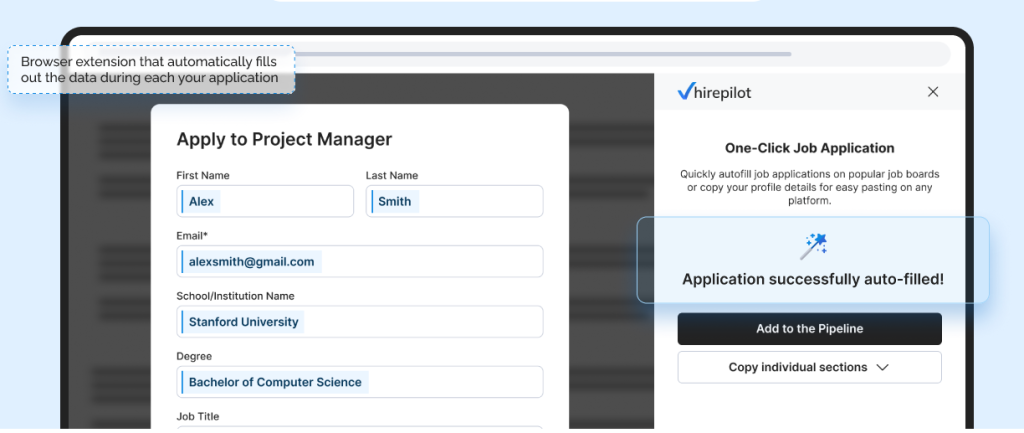
HirePilot serves as your all-in-one job search platform, streamlining every stage:
- Instantly spot missing ATS keywords with context-aware analysis
- Auto-fill application forms and save up to 80% of your time
- Generate smart, personalized outreach messages to contact hiring managers directly
- Organize every application, interview, and follow-up in a single dashboard
Combine these resources with proven AI networking strategies and manage your search using a robust job application tracker. When you add actionable follow-up techniques, you maximize your odds at every stage.
Final thoughts
The reality is clear: ATS technology is only becoming more robust, and employers will continue to refine their systems and expectations. But you can outpace even the smartest software with a thoughtful, tailored, and strategy-driven approach.
Rather than seeing ATS as a blockade, focus on it as your first interviewer. Each tweak to your language boosts visibility and demonstrates you’re a candidate who continually adapts. Don’t just adapt, though, stand out by using the best tools, a proven framework, and an attitude of proactive problem-solving.
If you’re navigating rejection or want to regain momentum in your job hunt, read stories of resilience and advice on how to rebuild your career confidence after setbacks. And for more sector-specific insights, keep an eye on forward-thinking sources like Forbes Careers andMonster’s resume guides.
For a truly modern job search, pair keyword mastery with smart networking and real human outreach, unlocking opportunities most never see.
FAQ: Everything you’re asking about ATS keywords
1. How many ATS keywords should I include in my resume?
Aim for the five to seven most relevant keywords for each position, drawn directly from the job posting and ensure they appear naturally across your summary, skills, and work bullets. Don’t overdo it: algorithms can penalize obvious keyword stuffing. Instead, edit your resume for every application and use AI job search tools for extra accuracy.
2. Do soft skills really count in ATS?
Absolutely. While they may carry less weight than hard skills in the first scan, demonstrating them in context. “Collaborated across three departments to meet strict deadlines”—gives you an edge, particularly for leadership or team-centric roles. Many modern ATS now score for “culture fit” based on these descriptors.
3. Should I copy-paste the entire job description into my resume?
Never. Advanced recognition can spot and penalize white-text tricks, and recruiters will quickly dismiss applications that feel generic or stuffed. Instead, focus on a tailored approach, adapting only the essential terms to the context of your unique contributions and results. When in doubt, use a resume transformation guide to align your achievements with role requirements.
4. How often should I update my resume keywords?
You should adjust your keywords for every application, job titles and required skills shift between roles and employers. A job tracker tool can help manage updates, store versions, and track how different keyword strategies perform. Regular revisions boost your match rate and help you learn what phrases drive more interviews.
5. What’s the single best tool for ATS resumes in 2026?
HirePilot, without a doubt, stands out for comprehensive keyword matching, resume updating, and application tracking all in one workflow. The platform simplifies optimization while providing direct recruiter contact, freeing you up to focus on your career story and interview preparation. You can explore and get started easily at HirePilot.
Ready to move forward with clarity and confidence?
You deserve a job search experience that works for you, not against you. Let HirePilot’s supportive tools and practical resources empower your journey, helping you stand out on every application and connect with great opportunities. Start for free today, your next interview could be closer than you think.