

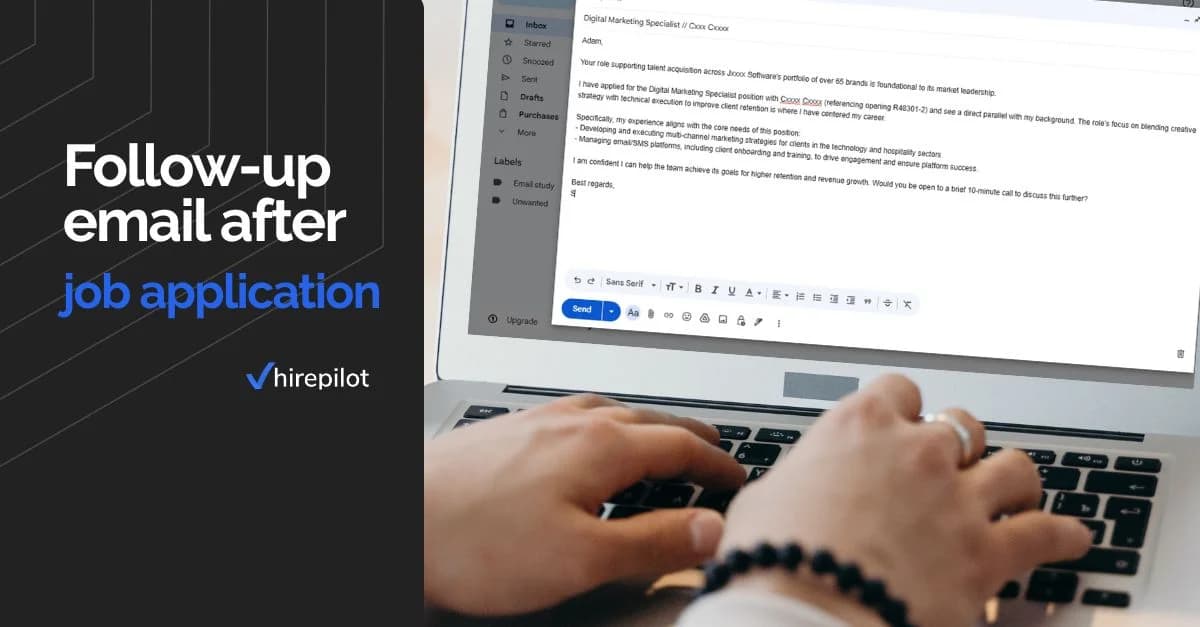

You hit submit on a job application that took you 45 minutes to complete. You tailored the resume, rewrote the cover letter, and triple-checked the formatting. Then nothing. A week passes. Then two. The job posting disappears from the company's site, and you have no idea if anyone even opened your file.
Most job seekers stop there. They assume silence means rejection, move on, and never realize that a single well-timed follow-up email could have moved their application from a buried folder to the top of a recruiter's screen. The follow up email after job application is one of the most underused tools in any job search.
This guide gives you exactly what to send, when to send it, and how to word it for every stage and situation you might face.
Why sending a follow-up email actually works
Recruiters are managing dozens of open roles at once. Each role might have hundreds of applicants. Your application does not disappear because someone disliked it. It often disappears because the volume is impossible to process manually, and no one has had time to sort the newest batch.
A follow-up email does two things at once. It signals that you are genuinely interested, not just someone who spray-applied to 200 jobs. It also puts your name in front of the recruiter at a moment when they might actually be reviewing that role.
Research from recruiting professionals consistently shows that candidates who follow up are perceived as more motivated and professional, as long as they follow up once, not repeatedly. One thoughtful message is an asset. Three messages in four days is a red flag.
The goal is not to pressure anyone. The goal is to stay visible without being annoying, and to give the recruiter an easy reason to pull up your file.
When to send a follow-up email after applying
Timing matters more than most people realize. Send too early and you look impatient. Send too late and the role may already be filled.
The one-week rule
For most roles, waiting five to seven business days before following up is the right window. This gives the hiring team time to sort initial applications without making you invisible.
If the job posting listed a specific application deadline, wait until two or three business days after that deadline. Reaching out before the deadline closes signals that you did not read the posting carefully.
When the posting says "no calls or emails"
If the job listing explicitly asks applicants not to reach out, respect that instruction. Following up anyway marks you as someone who ignores directions, which is the opposite of the impression you want to make.
In that case, your energy is better spent reaching out to the hiring manager directly through LinkedIn rather than through the official application channel. That is a separate strategy and covered later in this article.
According to data from the U.S. Bureau of Labor Statistics, the median time to fill a position varies widely across industries, which means your follow-up timeline needs to be calibrated to the sector you are targeting, not just a generic rule.
The anatomy of a strong follow-up email
Before the templates, it helps to understand what separates a follow-up that gets a response from one that gets ignored.
A follow-up email that works has four elements. First, a subject line that is direct and references the specific role. Second, a brief opener that reminds the reader who you are and where you applied. Third, one sentence that adds value, either a new credential, a specific observation about the company, or a restatement of your fit. Fourth, a polite close that makes it easy to respond without creating pressure.
Every template below follows this structure. You can adapt the language to match your voice, but do not cut any of the four elements.
Follow-up email templates for every situation
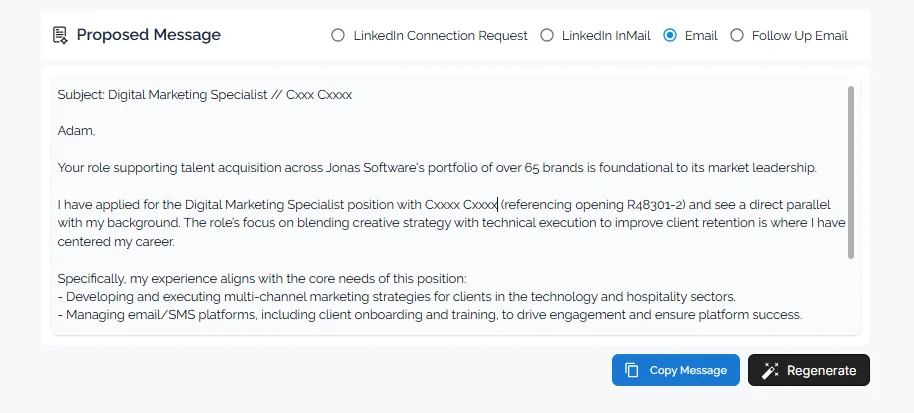
Template 1: Standard follow-up, one week after applying
Subject: Following up, [Job Title] application
Hi [Recruiter Name],
I applied for the [Job Title] position at [Company Name] last week and wanted to follow up briefly. I am genuinely excited about the role, particularly [specific detail about the team, product, or company mission].
I have [one-sentence summary of your most relevant qualification]. I would welcome the chance to speak with you and happy to share any additional materials.
Thank you for your time.
[Your Name]
[LinkedIn URL or phone number]
Template 2: Follow-up when you do not have the recruiter's name
Subject: [Job Title] application, [Your Name]
Hello,
I recently submitted my application for the [Job Title] role at [Company Name] and wanted to reach out directly to express my continued interest. I have [X years of experience or specific skill] and believe I could contribute meaningfully to [specific team or goal].
Please let me know if there is any additional information I can provide.
Thank you for considering my application.
[Your Name]
[LinkedIn URL or phone number]
Template 3: Follow-up after a phone screen with no response
Subject: Following up on our conversation, [Job Title]
Hi [Recruiter Name],
I wanted to thank you again for the time we spoke last [day of week]. I came away even more excited about the [Job Title] opportunity after learning more about [something specific from the call].
I am still very interested and wanted to check in on next steps. Please let me know if there is anything else you need from me.
Looking forward to hearing from you.
[Your Name]
[Phone number]
Template 4: Follow-up after a job interview with no response
Subject: Thank you, [Job Title] interview follow-up
Hi [Interviewer Name],
Thank you again for the conversation last [day]. I enjoyed learning about [specific project, team challenge, or company initiative mentioned in the interview], and I remain very interested in joining the team.
I wanted to follow up on timing for next steps. I am available to connect further whenever it works for your schedule.
Best,
[Your Name]
Template 5: Follow-up after a second-round interview
Subject: Second round follow-up, [Job Title]
Hi [Name],
I appreciate the time the team invested in our second conversation last [day]. I left the discussion feeling confident about the alignment between my background in [specific skill area] and what you are building at [Company Name].
I would love to know where things stand and whether there is any additional information I can provide to support the decision.
Thank you again for the opportunity.
[Your Name]
Template 6: Following up after a job fair or recruiting event
Subject: Great to meet you at [Event Name], [Job Title]
Hi [Name],
It was a pleasure speaking with you at [Event Name] last [day]. I submitted my application for [Job Title] after our conversation and wanted to follow up to ensure it is in the right hands.
I am excited about what [Company Name] is doing in [brief industry reference], and I would welcome any next steps.
Best,
[Your Name]
Template 7: Follow-up when a contact referred you
Subject: Referred by [Contact Name], [Job Title] application
Hi [Recruiter Name],
[Contact Name] suggested I reach out directly after I applied for the [Job Title] role. My background in [specific area] aligns closely with what you described in the posting, and I would love the opportunity to discuss it further.
I have attached my resume for your reference. Please let me know if you have any questions.
Thank you,
[Your Name]
Template 8: Final follow-up before moving on
Subject: [Job Title] application, final check-in
Hi [Name],
I have been following up periodically regarding my application for [Job Title] and wanted to send one last message before directing my attention elsewhere.
I remain very interested in [Company Name] and would welcome a conversation if the timing works. If the role has been filled, I completely understand and would appreciate being considered for future openings.
Thank you for your time throughout this process.
[Your Name]
What to do when email alone is not enough
Sometimes the application channel is a black hole regardless of how good your follow-up email is. The company might be using an applicant tracking system that buries incoming mail. The recruiter might have left the role. The position might be on hold.
When that happens, the most effective move is bypassing the application channel entirely and reaching the hiring manager directly. This means finding the right person on LinkedIn, crafting a message that references your application, and making it personal enough that it does not read like spam.
If you want a step-by-step approach to this, how to message a recruiter on LinkedIn covers exactly how to structure those outbound messages so they get opened.
The subject line problem most applicants miss
Most follow-up emails fail at the subject line. Vague lines like "Checking in" or "Job inquiry" do almost nothing. The recruiter cannot connect your message to a specific role, and there is no reason to open it over everything else in the inbox.
A strong subject line contains the job title and signals intent without being pushy. "Following up, Senior Marketing Manager application" is far more effective than "Just checking in." The goal is to make it effortless for the recruiter to know exactly why you are writing before they even open the message.
Keep subject lines under ten words. Avoid question marks in subject lines. Never use all caps or urgency language. These patterns read as noise.
Tracking your follow-ups so nothing falls through the cracks
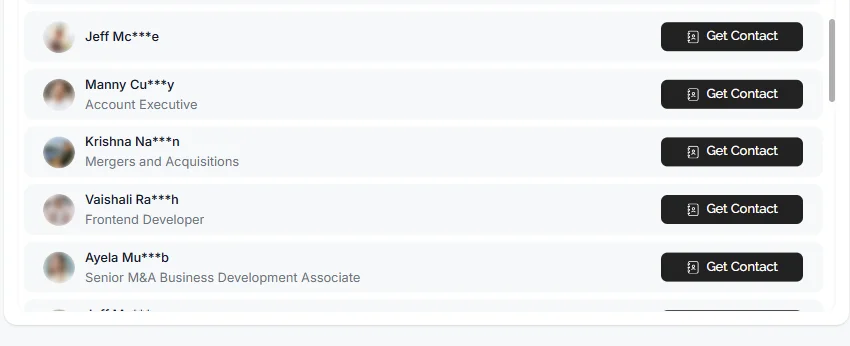
If you are applying to more than a handful of roles at once, it becomes genuinely difficult to remember who you followed up with, when you sent the message, and what the response was. A scattered process leads to either following up too many times with the same company or forgetting to follow up at all.

The best approach is treating your follow-up schedule as part of a structured application tracking system. For anyone managing multiple active applications, organizing your job search with a job tracker can prevent the kind of overlap that makes job searching feel chaotic.
When each application has a logged status and a noted follow-up date, you spend less mental energy trying to remember where things stand and more time actually writing thoughtful messages.
Tone calibration across different company types
The same follow-up email should not go to a startup and a Fortune 500 company. The structure stays the same but the voice should shift.
For startups and creative companies, slightly more direct language reads well. A short, punchy message that gets to the point signals that you understand their culture. Avoid overly formal sign-offs like "Sincerely" and lean toward "Best" or simply your name.
For corporate environments, financial firms, or government roles, formal tone is safer. Full sentences, no contractions, and a traditional structure communicate professionalism. A line like "I appreciate your time and consideration" lands better than "Thanks for taking a look."
When in doubt, mirror the tone of the job posting itself. Companies tend to write job descriptions that reflect how they communicate internally.
Signature insight: follow-up emails are a first writing sample
Here is an observation that most career advice skips entirely. Your follow-up email is not just a courtesy. It is the first piece of writing your future manager might read from you.
Recruiters share good follow-up emails with hiring managers. "Look at how this candidate followed up" is a real conversation that happens in hiring pipelines. A precise, clear, well-organized message communicates the same thing a great work sample does. It shows how you think, how you write, and whether you can be concise under pressure.
This reframes what the follow-up is for. It is not just about reminding someone you exist. It is about demonstrating professional capability in the smallest possible format. Treat every sentence like it is being read by the person who decides whether you move forward, because sometimes it is.
"Most candidates write follow-ups that apologize for existing. The ones that get callbacks write follow-ups that make the recruiter feel like they would be missing something if they did not respond. It is a completely different posture, and it is learnable." Viktor Shumylo, co-founder, HirePilot
Combining follow-up emails with direct recruiter outreach
There is a meaningful difference between following up on an application through the official channel and reaching out proactively to the hiring manager. Both strategies work, and combining them is more effective than either alone.
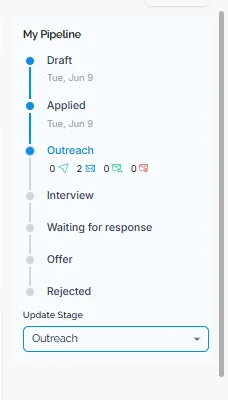
The follow-up email through the application channel covers your bases. The direct message on LinkedIn, personalized to a specific person's background and role, gets you into a conversation that the ATS cannot filter out. Many job seekers who feel stuck in application black holes find that AI-powered recruiter outreach strategies give them a way to move forward when silence has gone on too long.
HirePilot's Recruiter Outreach feature is built for exactly this situation. You can find the hiring manager for a role you have already applied to, generate a personalized message based on their profile and the role, and send it the same day. The Autofill feature handles the form submission side, the Job Tracker logs the application, and the Recruiter Outreach feature handles the human connection side. Both problems have a solution in one place.
If you are stuck in the silence phase of a job search, visiting hirepilot.co and exploring what the platform does for your outreach workflow is worth the time.
FAQ: Follow-up email after job application
How long should a follow-up email after a job application be?
A follow-up email should be three to five short paragraphs at most. Four to six sentences is usually enough. Longer messages dilute the message and ask too much of a busy recruiter's attention.
Is it appropriate to follow up on a job application after two weeks?
Two weeks without a response is a reasonable window to follow up, especially if you sent an initial message at the one-week mark. Keep the second message brief and acknowledge that you understand they are likely reviewing many candidates.
What should I write in a follow-up email after submitting a job application?
Your follow-up should include the job title you applied for, a one-sentence reminder of your most relevant qualification, and a polite request for any update on timing. Keep the tone professional and avoid language that creates pressure or urgency.
How do I follow up on a job application without being annoying?
Send one follow-up email five to seven business days after applying. If you hear nothing, a second message two weeks later is acceptable. After that, shift your focus to other opportunities or use LinkedIn to reach the hiring manager directly rather than continuing to email the same inbox.
Should I follow up by phone or email after submitting a job application?
Email is almost always preferred unless the job posting specifically lists a phone number for inquiries. Calling without an invitation puts the recruiter in an awkward position and can work against you. A well-written email gives them a chance to respond on their own schedule.
Find your next job faster - without the chaos
Spend minutes, not hours, on applications. Stay organized, follow up confidently, and get noticed sooner.
Share this article

Viktor Shumylo
Viktor Shumylo is the co-founder of HirePilot, an AI-powered job search platform. He has 10+ years of experience building SaaS products and tools that help job seekers optimize resumes, streamline applications, and land interviews faster.
More articles by Viktor Shumylo