



You sent 30 applications last month. You heard back from two. One was a rejection. The other went silent after the first call. Sound familiar? The problem is almost never that you are not qualified. It is that the way most people apply for jobs online is broken from the start.
Most job seekers follow the same script: find a listing, upload a resume, fill out the same form for the hundredth time, and wait. They treat every application like a lottery ticket. Volume over strategy. Hope over intention. And then they wonder why nothing moves.
This guide breaks that cycle. Here is exactly how to apply for jobs online in a way that actually gets responses, not just acknowledgments from an automated system that you'll never hear from again.
What online job applications actually are and why most fail
An online job application is a digital submission through a company website, job board, or applicant tracking system. You fill out a form, attach a resume, and submit. Simple in theory. Brutal in practice.
Here is what most job seekers do not realize: the person reviewing applications at a mid-size company might receive 300 submissions for a single role. Before any human sees your resume, software scans it for keywords, filters it by criteria, and decides whether you move forward. Most candidates are eliminated before a recruiter ever reads a word they wrote.
Knowing this changes how you approach every application. You are not just applying to a company. You are navigating a system. And systems can be understood and worked with.
Step 1: Find roles worth your time
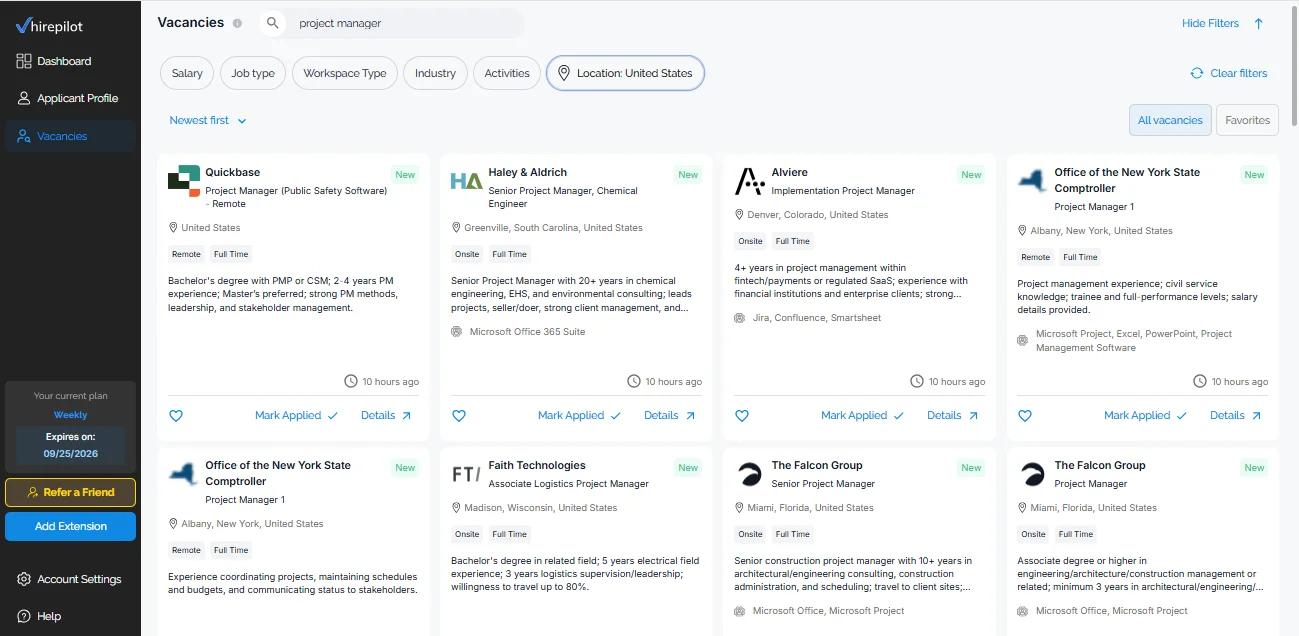
Before you apply to anything, you need to find roles that are genuinely worth applying to. This is not about being picky. It is about being efficient.
Start with the major job boards: LinkedIn, Indeed, Glassdoor, HirePilot. For tech roles, check Wellfound and Lever. For remote work, We Work Remotely and Remote.co surface listings that aggregators miss.
Company career pages are the most overlooked source. Many employers post roles on their own websites before they appear anywhere else. Checking directly can get your application in front of a recruiter days before the competition arrives.
Use date filters, always
Sort by newest first. A job posted three weeks ago may already be in final interviews. Focus your energy on listings from the past seven days. Set up email alerts on LinkedIn, Indeed, and Google Jobs so new roles come to you instead of requiring manual searching every morning.
Step 2: Read the job description like a document, not a headline
Most applicants skim job descriptions. They recognize a few familiar skills, see a title they like, and click apply. This is where most applications fall apart before they begin.
A job description tells you exactly what keywords the ATS is scanning for, what the hiring manager values most, and what kind of person they are trying to build around. Before you touch your resume, read the full description. Highlight the skills and requirements mentioned more than once. Those are your targets.
Ask yourself three questions. Do I meet at least 70 percent of the requirements? Can I speak specifically to the skills they mention? Does this role connect to where I want to go? If yes to all three, proceed.
Step 3: Tailor your resume, but do it efficiently
A tailored resume does not mean rewriting everything from scratch. It means adjusting your existing resume so the language mirrors the job description.
Applicant tracking systems scan resumes for exact keywords before a human ever reads them. If the posting says "project management" and your resume says "managed projects", you may not pass the filter. Understanding how ATS systems read your resume and which keywords carry the most weight is one of the highest-leverage skills you can develop as a job seeker.
Practically: copy the job description into a document, highlight the skills mentioned most, and check your resume against that list. Add what is genuinely missing. Match the terminology. Do not fabricate, but do not leave relevant experience invisible under different words.
Step 4: Write a cover letter that says something real
Cover letters are not always required. When they are, most candidates write a polished summary of their resume. Recruiters read dozens of these per day and remember none of them.
According to Harvard Business Review, the most effective cover letters answer one question: why this role at this company, and why now. Not why you are great in general. Why this specific opportunity makes sense for you at this specific moment.
Three paragraphs. One opening that references something real about the company. One paragraph that connects your most relevant experience directly to their need. One closing that expresses genuine interest without desperation. That is it.
Step 5: Fill out the application form like it matters, because it does
Here is something most job seekers do not know: many application forms are not just data collection. They are screening tools. Some platforms score your responses and filter candidates based on how you answer questions about experience, availability, and work preferences, before a human ever sees your name.
Every skipped field, every copy-paste error, every vague answer to a screening question is a signal. Not a loud one. But in a system designed to eliminate, small signals add up.
Fill out every field completely. Answer screening questions specifically, not generically. If asked for salary expectations and you are unsure, research the market rate and provide a range.
The repetitive part, entering the same work history and contact details for the hundredth time, is genuinely one of the most draining parts of a serious job search. HirePilot's autofill feature handles that automatically across LinkedIn Easy Apply, Indeed, and Workday, so you can spend your time on the parts that actually require thought.
The strategy most job seekers skip: apply early and reach out the same day
This is the single biggest difference between job seekers who get interviews and those who keep waiting.
Data from LinkedIn Talent Solutions shows that the majority of views and applications happen in the first three days after a job is posted. Applying early does not just improve your odds statistically. It means a recruiter sees your name before their inbox fills up and before they mentally close the role.
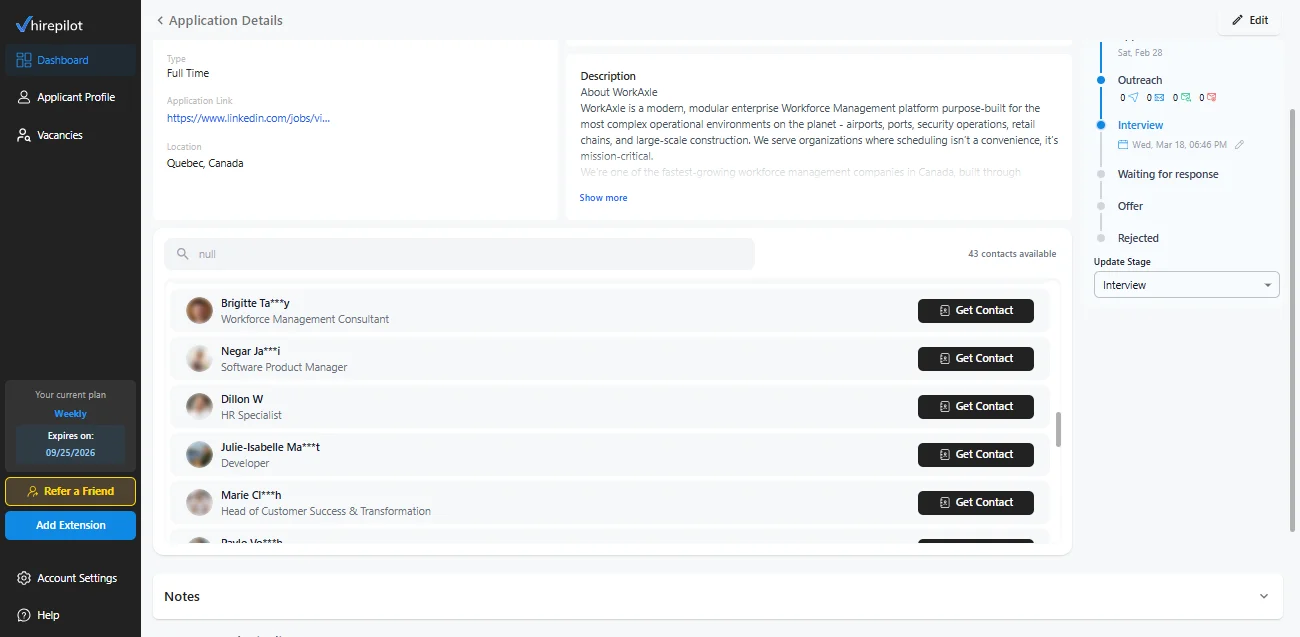
But early applications still sit in a queue. What separates the candidates who get called is the second move: reaching out to the hiring manager on LinkedIn the same day you apply. A short, specific message that references the role, mentions one genuine reason you are interested, and takes 60 seconds to write.
You are not bypassing the process. You are complementing it. Your application is already in the system. The message puts your name in front of the decision-maker before they open the pile. This combination, early application plus same-day outreach, is the closest thing to a reliable edge in a competitive job market.
Step 6: Track every application you submit
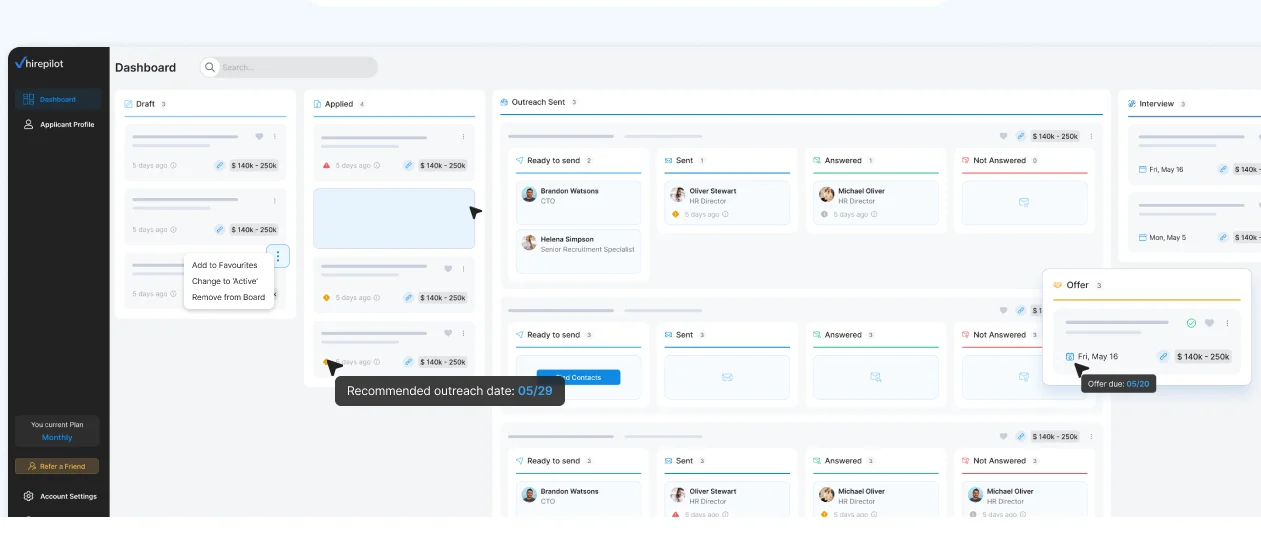
If you are applying to more than a handful of roles, you need a system. Without one, you will forget what you submitted, miss follow-up windows, and arrive at interviews unprepared because you cannot remember which version of your resume you sent or what the job description said.
At minimum, record the company name, role title, date applied, platform, and current status. Add the hiring manager's name and notes from the job description. A job tracker with a Kanban layout that logs applications automatically as you submit them removes one more manual step and keeps your search visible and organized.
Step 7: Follow up once, specifically, and then move on
Most job seekers apply and wait indefinitely. The ones who get more responses apply and follow up once, deliberately.
Send one email five to seven days after submitting. Reference the specific role. Mention one reason you are still genuinely interested. Ask if there is anything else they need from you. That is the entire message.
Knowing exactly how to follow up without being pushy is a skill most applicants never develop. The ones who do consistently hear back more often.
Common mistakes that reduce your response rate
Applying too broadly is the most widespread error. Fifty generic applications produce worse results than fifteen targeted ones with tailored materials. Quality beats volume in most job markets.
Ignoring the application instructions is the easiest way to get filtered out. Some postings ask you to use a specific subject line, answer a question in the cover letter, or submit materials in a particular format. These exist to identify candidates who read carefully. Follow them exactly.
Waiting too long is the last mistake. A study by Harvard Business Review on hiring practices confirms that early applicants have a measurably higher chance of advancing. Apply the day you see a role, not the day before the deadline.
How long does the online application process take
Time from application to response varies. Some companies move within a week. Others take three to six weeks before initial contact.
Follow up once at seven days. Then keep applying. Do not pause your search waiting for one company to respond. If you are applying to five to ten tailored roles per week and not seeing interviews within a month, the issue is almost always resume relevance, keyword optimization, or the seniority match between your experience and the roles you are targeting.
FAQ: How to apply for a job online
How do I apply for a job online for the first time?
Create profiles on LinkedIn and Indeed and upload a clean, formatted resume. Search for entry-level roles in your field, read descriptions carefully, and apply where you meet most of the requirements. Fill every field in the application completely and follow up after seven days if you do not hear back.
What is the best way to apply for jobs online?
Combine targeted applications with direct outreach. Apply through the official channel and send a brief, specific message to the hiring manager on LinkedIn the same day. Track every application so nothing is forgotten.
How do I fill out an online job application?
Read the job description before you start. Tailor your resume to match its keywords. Fill out every field, including optional ones. Answer screening questions specifically. Upload your resume in the format requested, usually PDF.
How many jobs should I apply to per week?
Five to ten well-targeted applications per week with tailored resumes produces better results than 30 generic submissions. Focus on roles where you meet at least 70 percent of the requirements.
Why am I not hearing back after applying online?
The most common reasons: your resume is not optimized for ATS keywords, you are applying too late after a posting goes live, or there is a mismatch between your experience and the role level. Check your resume for relevant terms, apply earlier, and make sure each application is genuinely tailored.
Is it better to apply online or in person?
For most professional roles, online is the standard. What matters more than the channel is your follow-up. A strong LinkedIn message to the hiring manager after applying does more than any in-person cold visit.
Most people treat job searching like a numbers game. Send enough applications and something will eventually land. But that is not how it works in practice. The job seekers who get interviews are the ones who apply strategically, follow up deliberately, and reach out to the right people directly.
If you are still filling out the same fields manually on every application, losing track of where you applied, or waiting for responses that never come, the process itself is working against you. HirePilot handles the repetitive parts automatically so you can focus on the moves that actually lead to interviews.
Find your next job faster - without the chaos
Spend minutes, not hours, on applications. Stay organized, follow up confidently, and get noticed sooner.
Share this article

Viktor Shumylo
Viktor Shumylo is the co-founder of HirePilot, an AI-powered job search platform. He has 10+ years of experience building SaaS products and tools that help job seekers optimize resumes, streamline applications, and land interviews faster.
More articles by Viktor Shumylo