



How to find a job you like comes down to three repeatable steps. Identify the specific tasks that hold your attention, not just the job title attached to them. Test that interest against a real job description or a small, low-risk trial before you commit. Then use a structured interest assessment to narrow the field before you start applying. A single quiz result or a gut feeling about a job title is not enough on its own.
This guide covers how to find a job that you like when your resume does not obviously point anywhere, what a job-interest quiz can and cannot tell you, what people searching for advice on Reddit tend to actually recommend, and why the job title usually matters less than the task list underneath it.
How do you find a job you actually like doing?
You find a job you actually like doing by working backward from tasks, not job titles. List the three or four tasks from your current or most recent role that made time pass quickly, then search for job descriptions built around those same tasks, regardless of what the role is called.
The same task shows up under wildly different titles. "Explaining a complicated process so a confused person understands it" appears in trainer roles, technical writer roles, customer success roles, and support specialist roles. Someone who liked that part of a past job but hated the job overall is often chasing the wrong title, not the wrong field. Reading five to ten real job postings and highlighting the recurring verbs (build, explain, negotiate, organize, troubleshoot) is a faster filter than any title-based search.
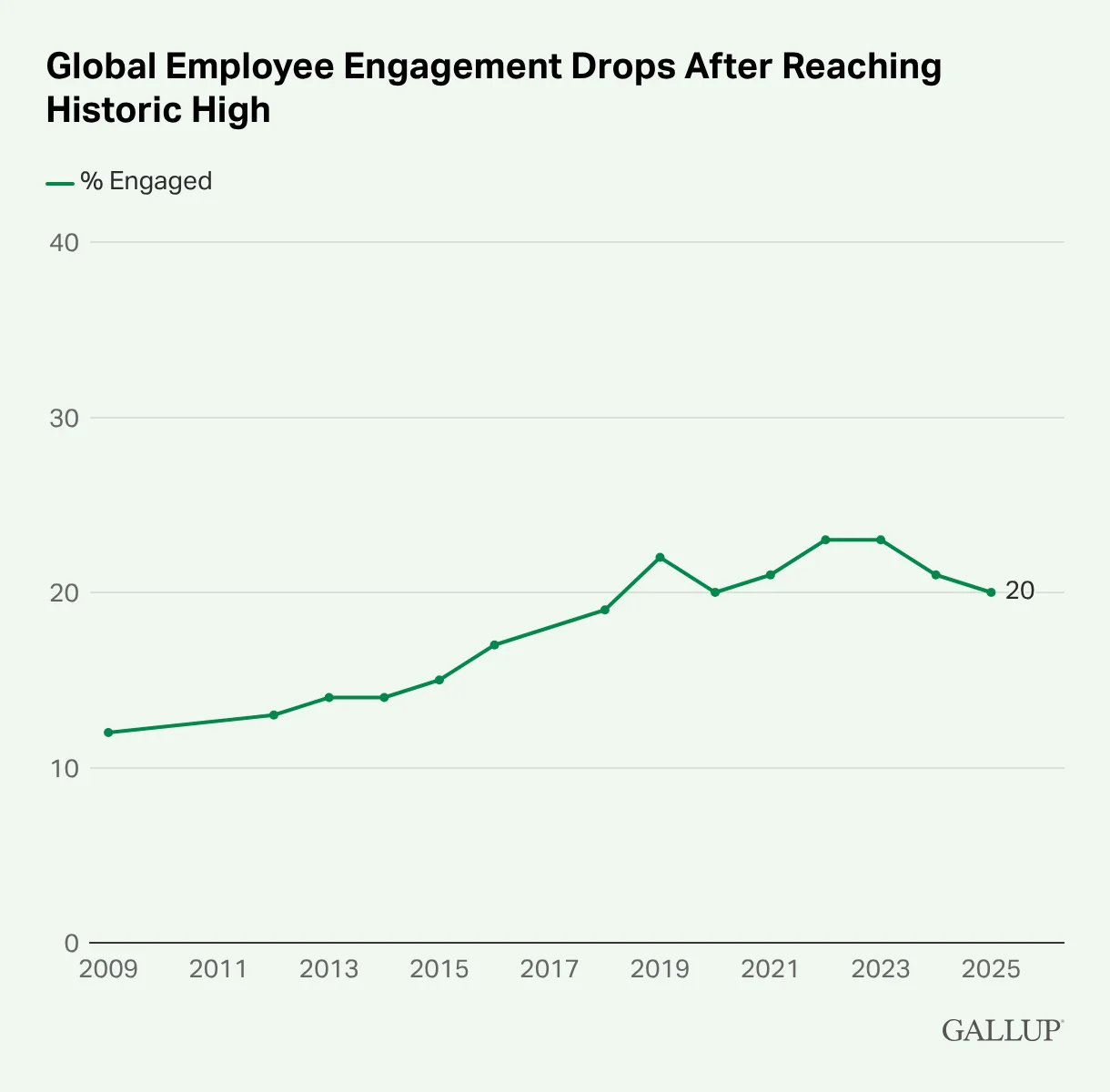
This distinction matters more than it looks. Gallup, a research and analytics firm that has tracked workplace attitudes worldwide since 2009, puts the share of employees globally who describe themselves as engaged at work at roughly one in five, a number that has been drifting down rather than up in recent years. A large part of that gap comes from people who took a title that sounded right on paper and never checked whether the daily task list matched what they actually enjoy doing. Realistic expectations about how long that kind of search takes also help. A longer timeline for finding work you enjoy rather than just any open role is normal, since fit requires filtering on more than availability.
How do you find out what job is right for you?
The fastest way to find out what job is right for you is a structured interest assessment paired with a reality check against real job postings. An assessment narrows the field to a category of work. Real job ads confirm whether that category matches tasks you would tolerate for 40 hours a week, not just tasks that sound interesting in the abstract.
The most widely used free version is the O*NET Interest Profiler, a career interest test built by the U.S. Department of Labor and distributed through CareerOneStop, its public career resource site. It runs about 30 short questions, takes roughly five minutes, and sorts answers into six broad interest categories based on the Holland RIASEC model (realistic, investigative, artistic, social, enterprising, conventional), a widely used framework in career counseling for grouping work interests. The output is a category, not a job title, so someone who finds out what job is right for me through the assessment still needs to cross-check the category against three or four real postings before treating it as a direction.
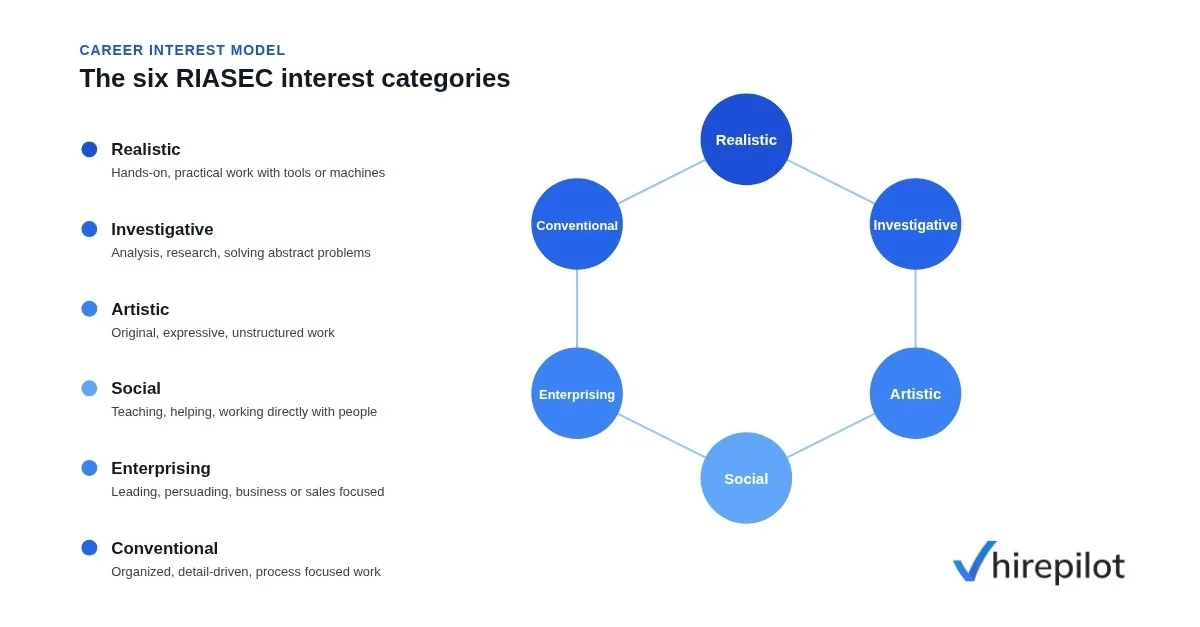
This two-step approach also answers a related version of the same question: how to find a suitable job for me when nothing on a resume points anywhere specific. Instead of trying to reverse-engineer a title from a work history, the assessment gives a starting category, and the posting review confirms whether that category holds up once actual duties are on the page.
Is there a quiz that tells you what job you would like?
Yes, and the honest answer is that a quiz can point toward a broad category of work, not a specific job someone will enjoy. The O*NET Interest Profiler, free through CareerOneStop, is the standard version most career counselors and school programs use, and it measures interest patterns rather than skill level or salary expectations.
Before taking the full assessment, a quick gut-check can show roughly which direction the result is likely to point. For each statement below, a "yes" leans toward that category being part of the answer.
| Statement | Interest category |
|---|---|
| I would rather fix or build something with my hands than write a report about it | Realistic |
| I like figuring out why something is not working before anyone tells me to | Investigative |
| I get restless doing the same task the same way every day | Artistic |
| I remember how a conversation with a stranger went better than most other conversations | Social |
| I would rather pitch an idea to a room than perfect it alone first | Enterprising |
| I feel calmer when a task has a clear checklist and a clear end point | Conventional |
Two or three "yes" answers clustered in the same row usually match the category the full O*NET Interest Profiler will surface. Treat this table as a five-minute preview, not a replacement. A quiz built around a short set of questions cannot account for a specific manager, company culture, or commute, all of which affect whether a job feels enjoyable day to day. The value of a job you like quiz, short or full-length, is narrowing a wide field down to two or three categories worth researching further, not producing a final answer.
What does Reddit say about finding a job you like?
Discussion threads about finding a job you like tend to converge on the same handful of recommendations rather than any single secret. The most common pattern is testing interest at a small scale before fully committing, whether through a short contract, a volunteer project, or a few hours of shadowing someone already doing the work.
A second common thread is talking to someone in the role before applying rather than only reading the job description. A short conversation about what an average Tuesday looks like tends to surface mismatches that a polished posting will not mention. A third recurring point is treating the first six to twelve months in any new field as a trial period rather than a permanent verdict, since almost every new job includes an adjustment period that gets mistaken for the wrong fit. None of this requires a specific subreddit or thread. The pattern repeats across job search communities because it reflects a real gap between how postings describe a role and how the role actually feels.
Reading job descriptions with intent to test fit works better once the application process itself is not eating up all the available time. Strategies for a job search that produce results instead of just volume generally free up the hours needed to actually research a role before applying to it.
Why do so many job searches end in a job people tolerate instead of one they like?
Most job searches end in tolerance instead of enjoyment because people optimize for getting any offer and stop looking the moment one arrives, rather than filtering by daily task fit from the start. The real difference between a job someone tolerates and one they like usually comes down to whether tasks were checked before salary, title, or urgency to leave a current position took over the decision.
This is the part most guides skip. A job search under time pressure collapses into "will this place hire me" rather than "will I still want to do this task list in six months." Both questions matter, but only one of them predicts whether the job will still feel tolerable a year in. Building in even one round of task-level filtering, using the assessment and posting review described above, changes the odds without adding much time to the search.
"Most people apply to job titles. The ones who actually end up liking the work usually applied to a task list first and let the title come second." Viktor Shumylo, co-founder, HirePilot
Where does a job search tool fit into finding a job you like?
Once the target is clearer, the slow part of a job search is usually the mechanics, not the decision-making. HirePilot combines a job board, autofill for LinkedIn Easy Apply, Indeed, and Workday applications, a Kanban-style job tracker that logs autofilled applications automatically, and recruiter outreach that surfaces the actual hiring manager or team contact behind a posting.
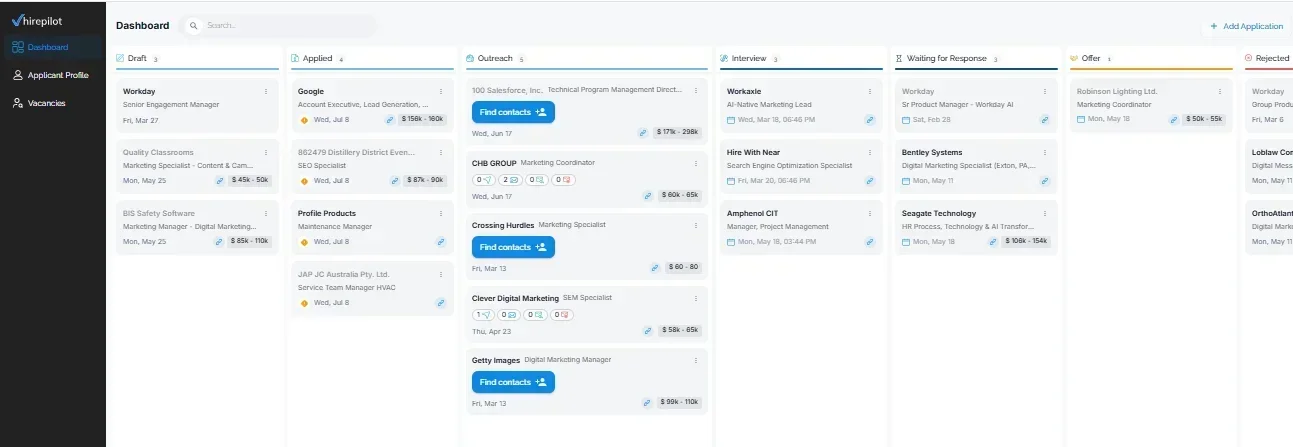
That last piece matters most for this specific problem. Once a category or a handful of target roles are identified through an assessment and a task-based filter, reaching out directly to someone already in that role is the fastest way to confirm fit before investing weeks in an application process. Job search methods that go beyond spraying applications across every open listing tend to build in this kind of direct check earlier rather than later.
FAQ: how to find a job you like
How long does it take to find a job you actually like?
Longer than a search for any open role, since fit requires filtering on tasks and daily reality in addition to availability and pay. Timelines vary widely by field and experience level, and treating six months as a realistic floor rather than a sign something is wrong tends to reduce unnecessary panic mid-search.
What if my quiz result does not match my resume?
That is common and not a sign the quiz failed. A resume reflects past decisions, some made under financial pressure rather than preference. Cross-check the quiz category against real job postings rather than against a resume built for a different goal.
Is it normal to not particularly like your job?
It is common. Global workplace research from Gallup puts the share of engaged employees worldwide at roughly one in five, meaning most people are not describing their current job as one they actively enjoy. Common does not mean permanent, and the task-first filtering approach applies whether someone is job hunting from scratch or repositioning within a current field.
Can you find a job you like without changing careers entirely?
Yes. Many task-level mismatches get solved by moving to a different role inside the same industry or company, rather than starting over in an unrelated field. Auditing which tasks felt good and which did not, then targeting internal roles or adjacent titles built around the good tasks, is usually faster than a full career change.
Does a job you like still feel like work some days?
Yes. Liking a job means the overall task list and environment fit well, not that every single day feels effortless. A job you like still includes boring meetings and slow weeks. The difference from a job you tolerate is that the bad days stay occasional rather than becoming the baseline.
Find your next job faster - without the chaos
Spend minutes, not hours, on applications. Stay organized, follow up confidently, and get noticed sooner.
Share this article

Viktor Shumylo
Viktor Shumylo is the co-founder of HirePilot, an AI-powered job search platform. He has 10+ years of experience building SaaS products and tools that help job seekers optimize resumes, streamline applications, and land interviews faster.
More articles by Viktor Shumylo