


You spend an hour tailoring your resume. You write a cover letter that actually sounds like you. You submit the application through the company portal and then wait. Days pass. A week. Nothing. No acknowledgment, no update, no human response of any kind.
That silence is not a coincidence. Most applications get filtered by software before a person ever reads them. The candidates who move forward are often the ones who found a way to reach the hiring manager directly, before or right after applying. The application became a formality. The conversation was the real move.
Knowing how to find the hiring manager for a job is the skill that separates passive applicants from people who actually get called back. This guide walks you through every reliable method, from LinkedIn research to internal networking to tools that make the whole process faster.
Why reaching the hiring manager matters
Most job postings go to an applicant tracking system first. The system filters by keywords, then passes a short list to a recruiter, who passes a shorter list to the hiring manager. By the time a human being is reading your name, dozens of qualified people have already been removed from consideration automatically. According to Harvard Business School's research on hidden workers, a significant share of qualified candidates are filtered out by applicant tracking systems before a recruiter ever reviews their application.
When you contact the hiring manager directly, you bypass that first filter entirely. Your message lands in front of the decision-maker while most applicants are still waiting for an automated confirmation email. That timing advantage is real and measurable.
LinkedIn's Global Talent Trends report consistently finds that a large share of hires come through referrals and direct networking rather than open applications. Reaching the hiring manager is not a trick. It is how the professional labor market actually functions for a significant portion of roles.
How to find the hiring manager on LinkedIn
If you are trying to figure out how to find hiring manager LinkedIn profiles quickly, this is the most reliable starting point. Almost every professional is findable there, and the platform is designed to surface exactly the kind of relationship context you need.
Start with the company page
Go to the company's LinkedIn page and click "People." From there you can filter by title or department. If you are applying for a marketing role, filter for titles like "Marketing Manager," "Head of Marketing," or "VP of Marketing." You are looking for the person who would logically manage the team this role sits on, not the recruiter.
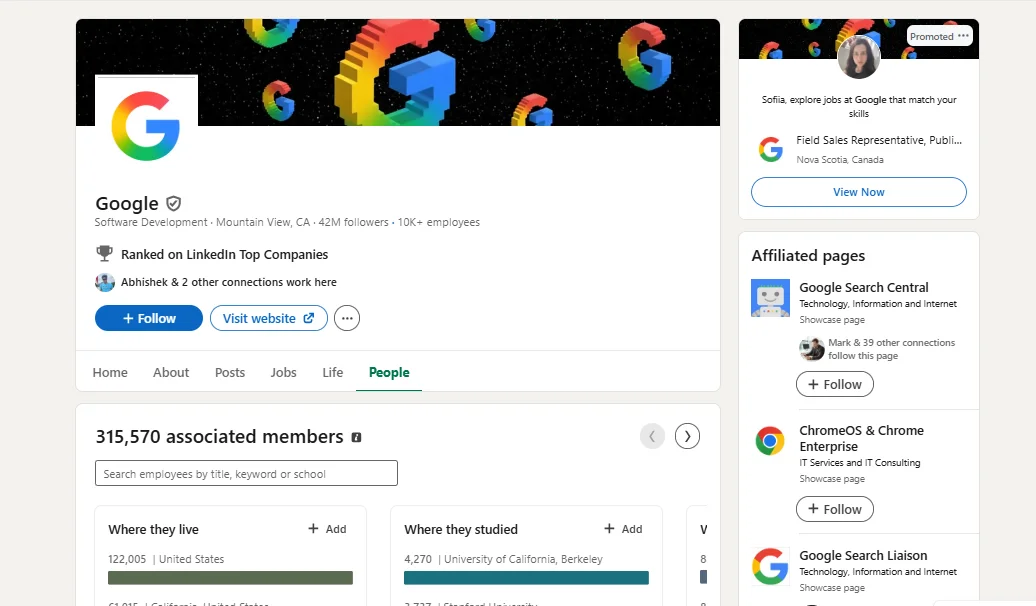
Pay attention to tenure. A person who joined six months ago and holds a management title in the right department is likely involved in building that team. Someone with five years at the company and a director-level title in your target function is worth reaching out to even if their exact title does not match the job posting perfectly.
Use the job posting itself as a clue
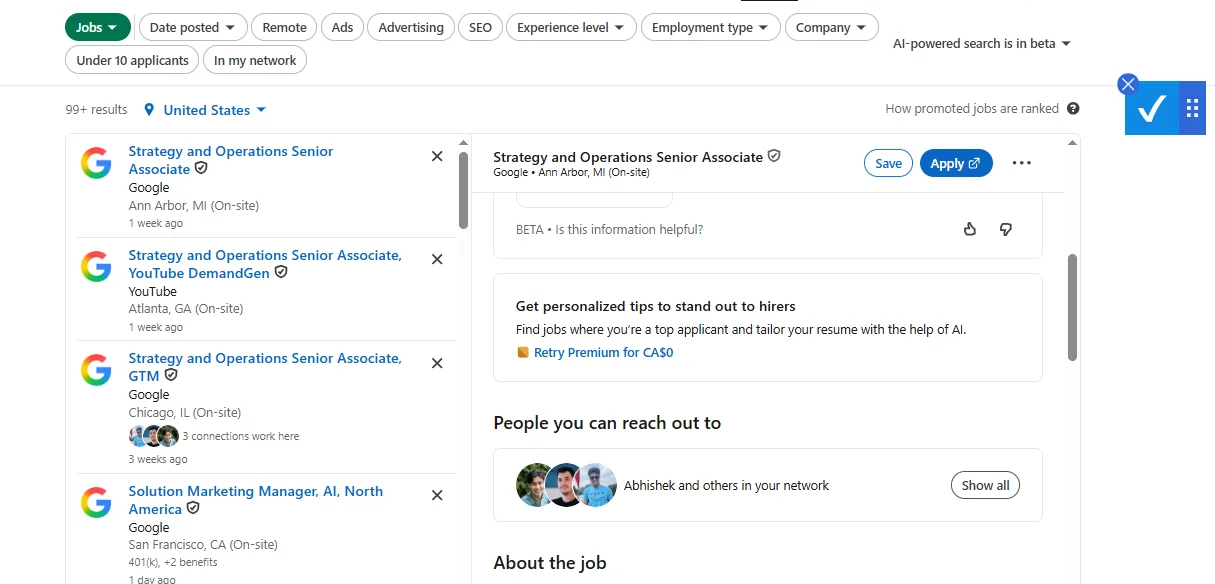
Some LinkedIn job postings show the recruiter who posted the listing. That recruiter can be a useful first contact and will sometimes tell you who the hiring manager is. More importantly, the recruiter's profile will show you which team they support, which narrows your search on the people page significantly.
If the posting mentions a team name, a project, or a specific tool the team uses, search for those details in employee profiles. People often list internal team names and tools in their experience descriptions, and that language can surface the right person faster than title-based filters alone.
How to find the hiring manager when LinkedIn is not enough
LinkedIn works well for mid-size and large companies with active employee profiles. For smaller companies or roles where the decision-maker keeps a minimal online presence, you need a few additional approaches.
Check the company's website for a team or about page. Many companies list department leaders directly. Check whether the company has a blog, because writers and contributors are often the people managing the teams doing that work. Look at press releases and news coverage, which frequently quote the managers responsible for specific functions or products.
Twitter and GitHub are useful for technical roles specifically. Engineers and technical managers often maintain active profiles on both platforms and are reachable there in ways they are not on LinkedIn.
How to approach the hiring manager once you find them
Finding the person is only half the challenge. Reaching out in a way that feels natural and professional is what actually moves the conversation forward.
What a good outreach message looks like
Your message should be short, specific, and low-pressure. The goal is not to ask for a job. The goal is to introduce yourself as a serious candidate and express genuine interest in the team's work. Three to four sentences is usually enough.
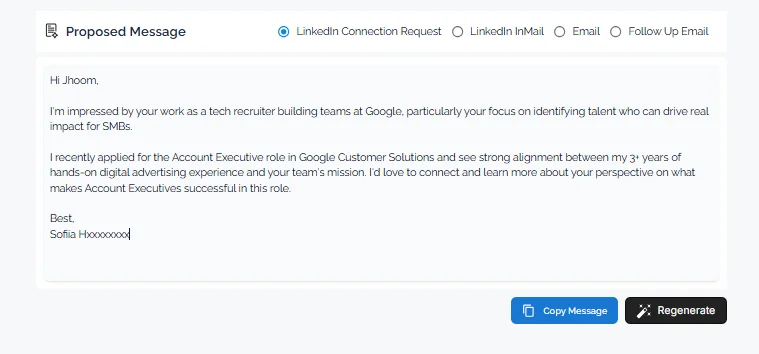
Mention the specific role you applied for. Reference something concrete about their team's work, a product launch, a published piece, a company initiative. Ask one clear question or make one clear request, such as whether they would be open to a brief conversation. Do not attach your resume to the first message unless they ask.
If you are wondering how to address hiring manager in cover letter situations where you know their name, use "Dear [First Name] [Last Name]" rather than a generic greeting. Using their actual name signals that you did the work to find them, which already differentiates you from the majority of applicants who write "To Whom It May Concern."
Timing your outreach
The best time to reach out is within 24 to 48 hours of submitting your application. You are fresh from writing the application, so your message will be specific and informed. The hiring manager, if they have already received your materials, will recognize your name immediately.
Do not wait until after you have heard nothing for two weeks. At that point, outreach can feel like a follow-up rather than an introduction, which changes the dynamic. Early outreach positions you as proactive. Late outreach can come across as anxious.
If you have not heard back after your initial message within one week, a single brief follow-up is appropriate. After that, move on and continue your search elsewhere.
How to approach a hiring manager for an internal opportunity
Internal job moves carry a different dynamic than external applications. You already have access to people who know the hiring manager, which is both an advantage and something that requires careful handling.
Before you apply or reach out, think about whether you have any existing relationship with the hiring manager or anyone on their team. A warm introduction from a mutual colleague is far more effective than a cold message. Ask that colleague if they would be comfortable mentioning your interest to the hiring manager before you reach out directly.
When you do message the hiring manager directly, acknowledge the internal context. Something like "I wanted to reach out directly before the formal process moves forward" communicates respect for the process while still establishing a personal connection. Be specific about what draws you to their team, not just the role. Internal hiring managers care whether you will be a good cultural fit for their specific group, not just whether you meet the job description.
Keep your manager informed if your company culture expects that. Some organizations treat internal applications as entirely confidential until further along in the process. Others expect transparency from the start. Navigating that correctly matters for your professional relationships regardless of how the opportunity turns out.
Tools that make finding the hiring manager faster
Manual LinkedIn research works, but it takes time. For people applying to multiple roles simultaneously, the time cost adds up quickly.
Improve your visibility with hiring managers using approaches that cut the research time down significantly. The core principle is to move from reactive waiting to proactive contact, and the faster you can identify the right person, the more consistently you can apply that approach across every application.
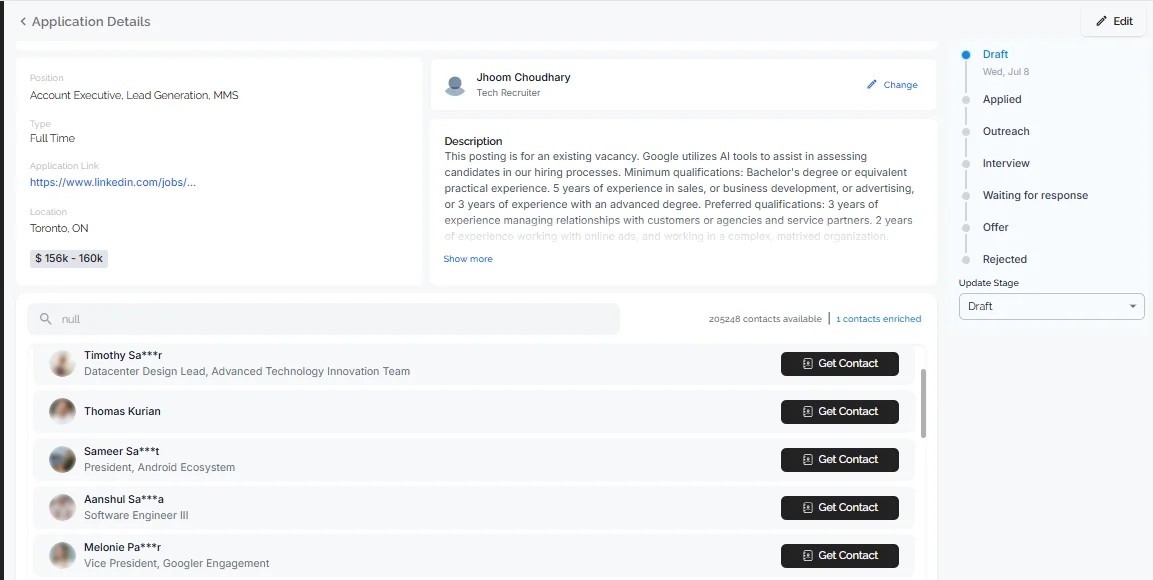
HirePilot's Recruiter Outreach feature is built specifically for this step in the process. When you find a job posting you want to apply to, HirePilot identifies the decision-maker's contact information in one click. You do not have to run through LinkedIn filters manually, cross-reference the company website, or guess at email formats. The contact is surfaced automatically, and from there you can send a personalized AI-generated outreach message the same day. The whole step that most candidates skip, or spend hours attempting manually, happens in minutes.
That speed matters because outreach only works when it is timely. Finding the hiring manager three weeks after applying is almost never useful. Finding them the same day and sending a genuine, specific message is often what gets you on their radar before the applicant pool even closes.
How to personalize your outreach so it actually gets read
Generic messages get ignored regardless of how well-timed they are. Personalization is what makes the difference between a message that gets a reply and one that gets deleted without being read.
Personalize cold messages effectively by starting from something specific and real. Reference a product feature you use, an article they published, a company milestone that was recently covered. One sentence of genuine specificity does more than three paragraphs of generic enthusiasm.
Connect your experience to their team's actual work. If you are applying to a growth marketing role at a company that just launched a new product line, mention that context and connect it to a result you delivered in a similar situation. That is not flattery. It is proof that you understand their world well enough to contribute to it.
The ask at the end should be low-pressure. Asking for a 15-minute call is less intimidating than asking for a formal interview. Asking for their perspective on a specific challenge is different from asking them to make a decision about you. Frame the outreach as the beginning of a conversation rather than a request for a job.
The signature insight: the hiring manager is often not the person who wrote the job description
Here is something most candidates do not realize. The person who wrote the job description is frequently not the hiring manager. HR teams, recruiters, and sometimes even outside agencies write job postings based on a brief from the team. The language in the posting reflects what HR thinks the role requires, filtered through their understanding of a function they may not work in directly.
The actual hiring manager often has a different set of priorities than the posting implies. They know which bullet points are real requirements and which ones were added by someone who does not understand the day-to-day work. They know what the last person in the role struggled with and what the team actually needs. When you reach the hiring manager directly, you get access to that real information. You can ask questions that reveal the actual context, and you can position your experience against what they actually care about rather than the official job description.
This is why a direct conversation with the hiring manager is often worth more than a perfectly optimized resume. The resume is built against the posted requirements. The conversation lets you align with the real ones.
"Most candidates optimize their application for the job description. The ones who get hired optimize for the hiring manager's actual problem. Those are not always the same thing, and talking to the right person is the only way to know the difference." Viktor Shumylo, co-founder, HirePilot
Putting it all together: a repeatable process
The goal is to make this approach consistent across every application, not just the ones you are most excited about.
When you find a role you want to apply to, apply first. Do not wait to find the hiring manager before submitting. Apply, then immediately start the research process. Use LinkedIn to identify the most likely decision-maker on the team. Check the company's website and any recent coverage. Use a tool like HirePilot if you want to compress that research step.
Draft your message the same day. Keep it short, specific, and low-pressure. Send it within 24 hours of applying. Then track the conversation alongside your application so you have the full context when you hear back.
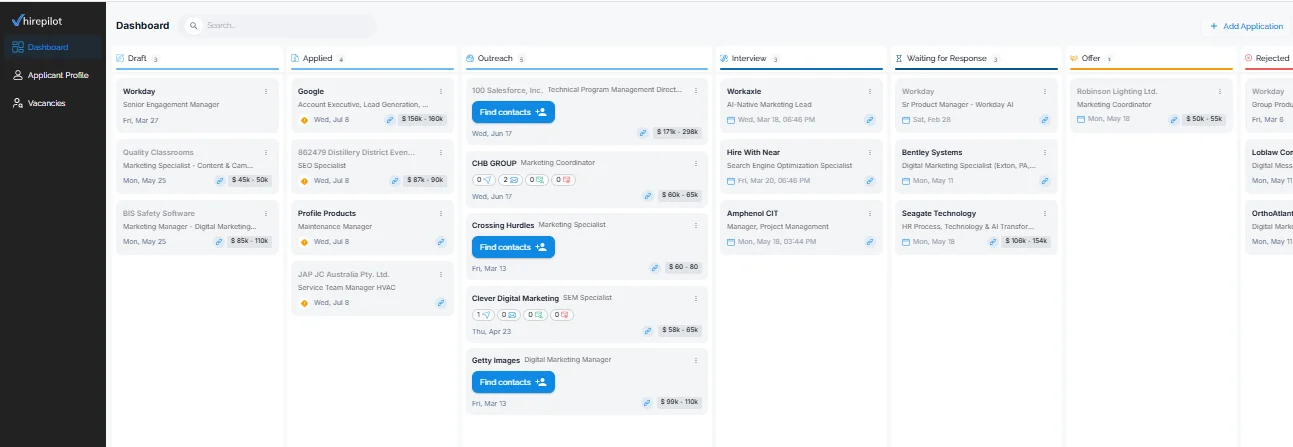
Organize your job search with a tracker so that every outreach attempt, every follow-up, and every application status is visible in one place. Without that structure, a high-volume job search becomes impossible to manage, and you lose track of who you have contacted and what the next step should be.
The candidates who consistently land interviews are not always the most qualified on paper. They are the ones who found the right person, sent the right message at the right time, and followed up once. That process is entirely learnable and repeatable.
If you are tired of submitting applications and hearing nothing, HirePilot is built to fix exactly that. The platform brings every open role into one job board so nothing gets lost across tabs and bookmarks, handles the application side with autofill across LinkedIn, Indeed, and Workday, tracks every application in a Kanban board automatically, and finds the hiring manager's contact in one click so you can send outreach the same day. Start your job search with HirePilot and turn every application into an active conversation instead of a waiting game.
Frequently asked questions
How to find the hiring manager for a job when the posting does not list one
Start with LinkedIn's company people search and filter by department and seniority level. Look for managers or directors in the function the role belongs to. Cross-reference with the company's about page or team page on their website. If the company is small enough, a direct search on LinkedIn for the company name plus a relevant title will often surface the right person within a few minutes.
How to find a hiring manager on LinkedIn without a premium account
A free LinkedIn account is enough for most searches. Go to the company page, click "People," and use the title filter. You can also search directly in the LinkedIn search bar using the format "job title" plus "company name." Most hiring manager profiles are publicly visible, and you do not need premium access to find or message first-degree connections or mutual contacts who can introduce you.
How to find hiring manager contact information beyond LinkedIn
Check the company's website for a team or contact page. Use tools like HirePilot's Recruiter Outreach feature, which surfaces decision-maker contact information in one click from a job posting. Press releases, company blogs, and podcast appearances are also reliable sources that often include direct contact information or at least a verified email format you can replicate.
How to address hiring manager in cover letter when you know their name
Use "Dear [First Name] [Last Name]" as your salutation. Avoid "Mr." or "Ms." unless you are certain of the person's preference. If you only know the department and not the specific person, "Dear Hiring Manager" is acceptable, but a named salutation always reads as more prepared and specific. The LinkedIn research you do to find the person will almost always give you the full name you need.
How to approach hiring manager for internal opportunity
Start by identifying whether you have a mutual colleague who can make a warm introduction. If you do, ask that person before reaching out directly. When you message the hiring manager, acknowledge that you are an internal candidate and be specific about what draws you to their team, not just the role itself. Keep the tone professional and collegial since you will continue working in the same organization regardless of how the process goes.
Find your next job faster - without the chaos
Spend minutes, not hours, on applications. Stay organized, follow up confidently, and get noticed sooner.
Share this article

Viktor Shumylo
Viktor Shumylo is the co-founder of HirePilot, an AI-powered job search platform. He has 10+ years of experience building SaaS products and tools that help job seekers optimize resumes, streamline applications, and land interviews faster.
More articles by Viktor Shumylo