


Most candidates spend days preparing answers. They rehearse their story, practice their strengths and weaknesses, and memorize examples for behavioral questions. Then the interviewer says, "Do you have any questions for me?" and the room goes quiet.
That silence costs people jobs. Interviewers notice when a candidate has nothing to ask, and they interpret it as a lack of genuine interest. On the flip side, the candidates who ask sharp, specific questions are the ones who leave the room feeling like a peer rather than a supplicant.
This guide gives you 30 questions organized by category so you always know what to say, whether you're walking into your first interview or your fifteenth. You'll also find a section on unique questions most people never think to ask, a guide for entry-level candidates, and a full FAQ at the bottom.
Why the questions you ask matter as much as the answers you give
Interviews are two-way conversations, even if they rarely feel that way. When you ask a thoughtful question, you signal that you have done your research, that you think critically, and that you treat the conversation as a professional exchange rather than an audition.
Hiring managers are also evaluating fit during this phase. The questions you ask reveal what you prioritize, how you think about work, and whether you have a realistic picture of the role. A candidate who asks only about salary and benefits sends a different signal than one who asks about team dynamics and success metrics.
Preparing questions also keeps you from making a decision you'll regret. Accepting an offer without understanding the culture, the manager, or the growth path is one of the most common reasons people leave new jobs within the first year, according to SHRM research on employee retention.

Questions to ask about the role
These questions help you understand what success actually looks like in the position, rather than just what the job description says.
1. How would you define success in this role after 90 days?
This question reframes the conversation around outcomes. It tells you whether the hiring manager has a clear vision, and it gives you a concrete picture of what you'd be walking into.
2. What are the most common challenges someone in this position runs into in the first six months?
Interviewers appreciate candidates who think realistically. This question also surfaces important information about ramp-up time, team support, and hidden difficulties the job posting would never mention.
3. How has this role evolved over the past couple of years?
Roles that have changed significantly often signal a company in transition. This question helps you understand whether the position is growing in scope or shrinking, and whether the company is investing in it.
4. What does a typical week look like for someone in this position?
Job descriptions often describe the ideal state. This question gets at the daily reality, which is what you'll actually be living.
5. What tools and systems will I be working with most often?
Practical and specific, this question shows you're already thinking about how to be productive from day one.
6. Is this a new position or a backfill?
If it's a backfill, asking why the previous person left is appropriate and useful. If it's new, you want to know why the company decided to create it now.

Questions to ask about the team
The team you join will determine your daily experience far more than any other factor. These questions give you a real picture of what working with this group would look like.
7. How would you describe the team's working style?
You're listening for whether the answer matches your own preferences around collaboration, autonomy, and communication.
8. What's the team's biggest strength right now?
This is a softball question that tells you what the interviewer values and what they're proud of. It also tends to loosen the conversation.
9. What skill or perspective is the team currently missing that you're hoping this hire will bring?
This is one of the most important questions you can ask. The answer tells you exactly where the gap is and gives you a chance to connect your background directly to what they need.
10. How does this team handle disagreement or conflict?
Healthy teams have functional ways to address conflict. If the interviewer struggles to answer this or gives a vague response, that's useful information.
11. How long have most people on the team been here?
High turnover is a signal. If several people have left in the past year, you should dig deeper. If most people have been there for three or more years, that's a positive sign.
12. How often does the team collaborate with other departments?
Cross-functional work is increasingly common, and the answer tells you how siloed or connected your day-to-day would be.

Questions to ask about the hiring process
These questions help you understand what comes next and show that you're serious about moving forward.
13. What does the rest of the hiring process look like from here?
Always ask this. It tells you how many steps remain, what kind of assessments you might face, and how to plan your time.
14. What's your target start date for this role?
A tight timeline can work in your favor if you're available quickly. A loose timeline tells you they're not in a rush, which can affect your negotiation leverage.
15. Who else will I be meeting with during the process?
This question tells you who has influence over the hiring decision and lets you prepare for future conversations more strategically.
16. Is there anything from my resume or our conversation today that gives you pause?
This is a high-risk, high-reward question. Not everyone is comfortable asking it, but candidates who do often get the chance to address a concern that would otherwise have stayed unspoken. If you ask it, be ready to listen without becoming defensive.

Questions to ask about company culture
Culture questions require a bit more finesse because you're asking people to be candid about something they're often inclined to paint in the best light. Frame them in ways that invite honesty.
17. How would you describe the culture here in three words?
Three words forces specificity. Compare the three words different interviewers give you across the process to see whether the answers are consistent.
18. What do people here do when they disagree with a decision made by leadership?
This question gets at psychological safety and power dynamics in a way that more generic culture questions don't.
19. How does the company support professional development?
You're listening for specifics: mentorship programs, conference budgets, training resources, promotion timelines. Vague answers like "we encourage learning" are a yellow flag.
20. What's the leadership team's communication style?
Transparency from leadership is one of the top predictors of employee satisfaction. This question opens that topic without putting the interviewer on the defensive.
21. How has the company handled difficult periods in the past?
Every company goes through hard stretches. How leadership responded tells you a great deal about values and integrity.

Questions about growth and long-term fit
These questions signal that you're thinking about building a career here, not just taking a job.
22. Where do people who have been in this role typically go next within the company?
Career mobility matters. If there's no clear path forward, you want to know that before you accept an offer.
23. What does strong performance look like in year two and beyond?
This question builds on the 90-day question by extending your thinking. It also shows the interviewer that you're thinking long-term.
24. Can you tell me about someone who started in a similar role and grew into a senior position?
Concrete examples are more revealing than general statements. A company that genuinely promotes from within will have specific stories to share.

Unique questions most candidates never think to ask
These questions go beyond the standard list and tend to stick in interviewers' memories for the right reasons. Preparing for a job interview with a structured approach helps you get to the point where you're ready to deploy questions like these confidently.
25. If you could change one thing about how this team operates, what would it be?
This question invites honest reflection. Interviewers who have been around long enough to have an opinion will often give you a genuinely useful answer. Those who say "nothing" may not be the most self-aware leaders.
26. What's a belief about how work should be done that this team holds strongly?
This question surfaces cultural assumptions that rarely appear in job postings. Teams that value speed over polish, documentation over verbal communication, or individual ownership over consensus will often reveal those preferences when asked this way.
27. What's the biggest risk this company faces right now?
This is a bold question, and not every interviewer will answer it fully. But asking it positions you as someone who thinks strategically and doesn't shy away from difficult conversations.
28. What would make someone fail in this role?
Asking about failure surfaces information that success-framing questions miss. The answer often includes cultural mismatches, skill gaps, or behavioral patterns that derailed previous people in the job.

First job interview questions for entry-level candidates
If you're early in your career, some of the questions above may feel too advanced for your situation. These questions are designed specifically for entry-level candidates who want to show thoughtfulness without overreaching.
29. What do the most successful entry-level hires tend to have in common?
This question shows that you understand you're newer to the field and want to learn from those who succeeded before you. It also gives the interviewer useful information to share.
30. What's the best way to learn quickly and add value in this type of role?
Entry-level candidates are expected to have a learning mindset. Asking this question out loud demonstrates that you already have one.
The signature insight: questions are also negotiating tools
Most candidates treat the "do you have questions" phase as a formality or an opportunity to show interest. But questions also shift the dynamic of the conversation in a subtle, powerful way.
When you ask a sharp question and then listen carefully, you take on the role of the evaluator, even briefly. The interviewer becomes the one being assessed. This is not a manipulation tactic. It is simply what happens when two professionals are genuinely trying to understand each other.
The candidates who get offers are almost always the ones who left the interviewer feeling like they had a real conversation, not a performance review. Questions are the main mechanism for making that happen. Staying confident during a job interview is easier when you have a list of questions ready because preparation replaces the need for bravado.
"Candidates who ask specific, researched questions get better information and better offers. We built HirePilot to handle the application volume so that by the time you're in the interview room, you've had time to actually prepare questions like these instead of rushing to get one more form submitted."
Viktor Shumylo, co-founder, HirePilot
Putting it all together
You came to this article because you've felt that awkward pause when an interviewer asks if you have questions, and you didn't know what to say. That pause is fixable with a short list and a bit of preparation.
Pick five to seven questions from the categories above, mix the practical with the strategic, and always have at least one that reflects something specific you read about the company. The goal is not to ask all 30. The goal is to walk in with enough material that you never run dry and never waste the moment.
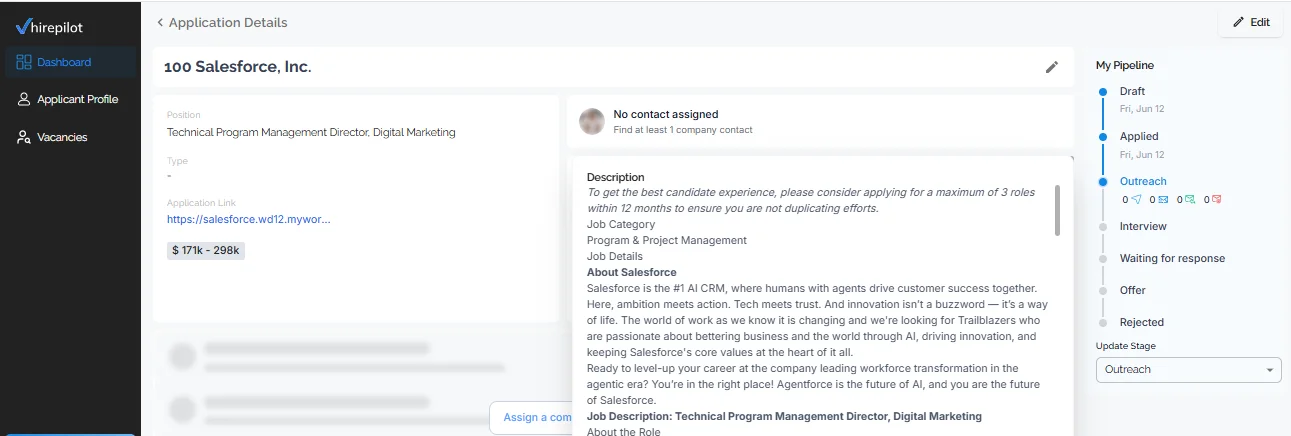
If you're still in the earlier stages of your job search, the HirePilot job search platform can help you apply faster with autofill across LinkedIn Easy Apply, Indeed, and Workday while the Job Tracker automatically saves every application to a Kanban board. The Recruiter Outreach feature helps you find the hiring manager and send a personalized AI message the same day you apply, so your name lands in front of the right person before the interview even begins.
FAQ
What are the best questions to ask job interviewees from a candidate's perspective?
The best questions are specific to the role, the team, and the company rather than generic. Asking about success metrics, team dynamics, and what distinguishes strong performers will consistently impress interviewers more than questions about benefits or vacation policy.
How many questions should I ask at the end of a job interview?
Three to five questions is the right range for most interviews. Any fewer and you risk seeming unprepared or uninterested. Any more and you risk running over time or seeming like you're stalling.
What questions should I avoid asking in a job interview?
Avoid asking anything you could have easily found on the company's website. Also avoid questions about salary and benefits in a first interview unless the interviewer brings it up first. Save compensation conversations for when you have an offer or when you're clearly in the final stages.
What are good first job interview questions for entry-level candidates?
Entry-level candidates do well with questions that show a learning mindset. Asking what the most successful new hires have in common, how the team prefers to give feedback, and what professional development looks like are all appropriate and impressive for someone earlier in their career.
Is it okay to bring a list of questions to a job interview?
Yes. Bringing a notepad or printed list of questions is professional and shows preparation. Glancing at a list during the "do you have questions" phase signals that you planned ahead, which most interviewers view positively.
Find your next job faster - without the chaos
Spend minutes, not hours, on applications. Stay organized, follow up confidently, and get noticed sooner.
Share this article

Viktor Shumylo
Viktor Shumylo is the co-founder of HirePilot, an AI-powered job search platform. He has 10+ years of experience building SaaS products and tools that help job seekers optimize resumes, streamline applications, and land interviews faster.
More articles by Viktor Shumylo