
What is an ATS applicant tracking system and why it exists
If you’ve ever applied for a job online and never heard back, chances are your resume didn’t even reach human eyes. The reason? An ATS applicant tracking system, the digital gatekeeper used by most employers today. An ATS is a software platform that automates the hiring process: it collects, sorts, and ranks job applications based on keywords, qualifications, and other criteria set by recruiters. Instead of manually reviewing hundreds or even thousands of resumes, companies use ATS software to instantly filter out candidates who don’t meet basic requirements. According to Forbes , up to 75% of resumes are rejected by ATS filters before a recruiter ever sees them. And a SHRM report found that 79% of recruiters use AI-powered tools, including ATS, to speed up hiring decisions and reduce screening time. What started as a tool for Fortune 500 companies has now become a standard across businesses of all sizes. Whether you’re applying to a tech startup, a marketing agency, or a university, your resume will likely pass through an ATS first.
How an ATS applicant tracking system works
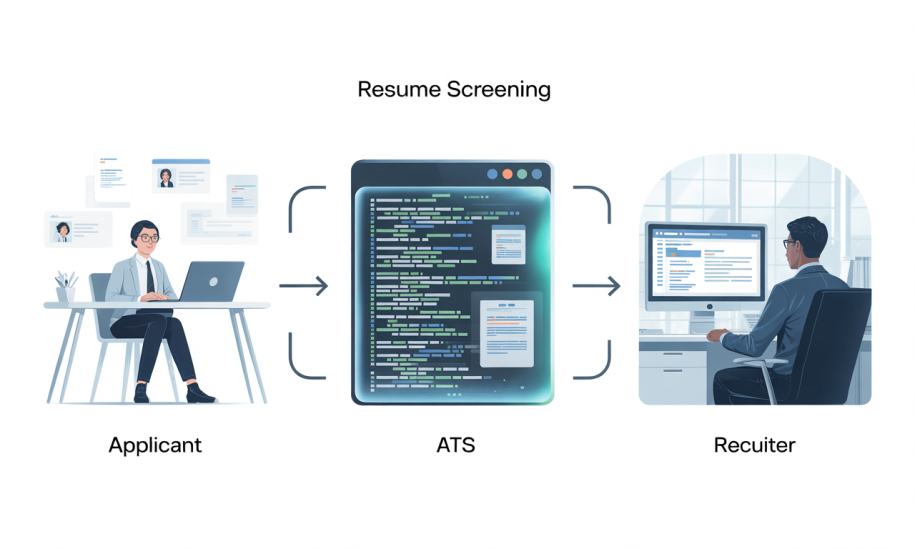
To understand how to beat the system, you first need to understand how it works. Most ATS platforms follow a similar four-step process:1. Resume parsing
When you upload your resume, the ATS scans it and extracts key information, name, contact details, skills, work experience, education, and more. If the formatting is too complex or the file type isn’t supported (for example, a graphic-heavy PDF), the ATS might fail to parse it correctly, causing you to be filtered out immediately.2. Keyword matching
Next, the system compares your resume to the job description. It looks for keywords that match the required skills, qualifications, and responsibilities. If the role requires “project management” or “Python,” but those terms don’t appear in your resume, the system will rank you lower or reject your application altogether. Pro tip: Use the same phrasing from the job posting in your resume. If the company lists “social media strategy,” don’t just write “digital campaigns.” The closer the match, the higher your chances.3. Scoring and ranking
The ATS then scores each resume based on how well it matches the job requirements. Recruiters often only review the top 10–20% of applications. That means even small improvements to keyword usage or structure can move your resume from the “reject” pile to the “review” pile.4. Shortlisting for human review
Finally, the top-ranked candidates are sent to the recruiter or hiring manager. If you make it this far, your resume will finally be read by a real person, but the ATS filter is the first and most critical hurdle. Related reading:Why ATS systems matter for job seekers
The role of ATS applicant tracking system has grown beyond simple resume storage, today, they’re deeply integrated into the hiring process. For job seekers, this means two crucial things:-
- You’re competing with algorithms before humans. Recruiters no longer have time to read every resume. In competitive industries, they rely on ATS scoring to narrow down the talent pool quickly.
-
- Your resume needs to be machine-readable and strategically written. Even a perfectly qualified candidate can be filtered out if the resume isn’t optimized for ATS parsing.
-
- Formatting matters: Avoid tables, headers, or complex layouts. Stick to simple sections with clear headings like Experience, Education, Skills.
-
- Keywords are crucial: If the job mentions “SEO strategy,” “Google Analytics,” and “content optimization,” include those exact terms naturally in your resume.
-
- Relevance beats volume: Tailor your resume to each role. One-size-fits-all resumes often fail to score well.
The evolution of ATS: From simple sorting to AI-driven hiring
When ATS software first appeared in the 1990s, it was little more than a database tool, storing resumes and matching basic keywords. But the rise of artificial intelligence has completely transformed the landscape. Today’s systems go far beyond keyword matching. They can:-
- Analyze writing style and tone to assess communication skills.
-
- Score candidates based on soft skills using NLP (natural language processing).
-
- Integrate with LinkedIn to pull in extra context from your profile.
-
- Predict candidate success using historical hiring data.
How to optimize your resume for an ATS applicant tracking system
If you take away just one lesson about ATS, it’s this: your resume must be written for two audiences, a machine first, and a human second. Even the most impressive career story won’t matter if the system can’t read or understand it. Below is a step-by-step guide on how to make sure your resume passes through ATS filters and lands in front of a recruiter.1. Use the right file format and structure
Many resumes are filtered out not because of the content, but because of formatting errors. Applicant Tracking Systems are programmed to parse information from text-based files. If the file type or layout is unreadable, the system will reject it before it’s even reviewed. Best practices:-
- Save your resume as a .docx or .pdf (only if the job posting says PDFs are accepted).
-
- Use a clean, single-column layout.
-
- Avoid graphics, charts, tables, or text boxes, they confuse parsing algorithms.
-
- Use standard section headers: “Experience,” “Education,” “Skills,” “Certifications.”
2. Match keywords strategically to pass ATS filters
ATS algorithms rely heavily on keyword matching. They scan resumes for terms that reflect the skills, qualifications, and experience listed in the job description. If those words don’t appear in your resume, even if you have the skills, you won’t make the shortlist. How to do it:-
- Copy the job description into a keyword analysis tool (like a word cloud generator).
-
- Identify the 10-15 most frequently used terms (e.g., “project management,” “CRM,” “Python,” “SEO”).
-
- Naturally integrate these terms into your skills, experience, and summary sections.
-
- Avoid “keyword stuffing.” ATS can detect unnatural repetition and may penalize it.
3. Use simple, clear language
ATS systems don’t understand creativity or metaphors. Phrases like “visionary growth ninja” or “data whisperer” might sound impressive to humans but will confuse the system. Instead, use industry-standard language that clearly communicates your skills and responsibilities. Instead of:-
- “Marketing Manager who revolutionized brand awareness.”
-
- “Digital Marketing Manager who increased brand engagement by 65% through targeted social media campaigns.”
4. Add a skills section with core keywords
A dedicated Skills section is one of the most important elements of an ATS-optimized resume. It’s where the system looks first for key terms. Best practices:-
- List 8-12 skills that are directly relevant to the job.
-
- Include both hard skills (e.g., JavaScript, project budgeting, SEO) and soft skills (e.g., communication, leadership, collaboration).
-
- Mirror the language from the job posting wherever possible.
5. Focus on relevance and recency
The ATS often weighs recent and relevant experience more heavily than older achievements. A common mistake job seekers make is listing too much irrelevant information, which dilutes the impact of their resume. Tips:-
- Focus on the last 10-15 years of your career.
-
- Emphasize accomplishments and metrics that align with the job description.
-
- Cut or shorten older, unrelated roles unless they show transferable skills.
How to check if your resume will pass ATS filters
Once you’ve optimized your resume, the next step is to test it before submitting. This ensures your work won’t go to waste. Here’s how:1. Use a free ATS scanner
Tools like Teal, Resumeworded, or Resume.io analyze your resume and show how well it matches a specific job posting. They break down keyword coverage, formatting issues, and section quality.2. Compare to job description
Manually check whether you’ve included all major skills and terms from the posting. If the job description lists “CRM software” and “lead generation,” make sure those phrases appear naturally in your resume.3. Run a plain text test
Copy and paste your resume into a plain text editor (like Notepad). If the structure breaks, or critical sections disappear, the ATS might not parse it correctly. Related reading: How to Pass ATS Filters: Resume Optimization Guide7 Popular ATS systems you should know
Understanding the tools recruiters use can give you a huge advantage. Here are seven of the most widely used ATS applicant tracking systems and what each one does:| ATS Platform | What It Does |
| Workday | A comprehensive enterprise-level ATS that uses AI to screen resumes, parse candidate data, and provide analytics to help large organizations manage massive applicant volumes. |
| Greenhouse | Focuses on structured hiring workflows, collaborative decision-making, and interview scheduling, helping teams build consistent and fair recruitment processes. |
| Lever | Combines applicant tracking with candidate relationship management (CRM), enabling recruiters to nurture talent pipelines and maintain long-term engagement. |
| iCIMS | Offers highly scalable recruitment solutions, including automated screening, compliance tracking, and advanced reporting, ideal for large corporations. |
| SmartRecruiters | Uses AI to match candidates to roles, supports multilingual recruitment, and integrates with job boards and sourcing tools to attract global talent. |
| JazzHR | A simple, budget-friendly ATS designed for small businesses, offering job posting, resume management, and interview tracking without unnecessary complexity. |
| BambooHR | Combines ATS capabilities with a full HR management suite, allowing teams to manage hiring, onboarding, and employee data in one integrated platform. |