

What doesn’t work anymore
Before we dive into the winning strategies, let’s clear out the dead weight. Many job seekers cling to outdated methods that waste time and yield zero results. Recognizing and abandoning these habits is the first step toward building a more effective job search.1. “Spray and pray” applications
The days of blasting your resume to every open position you find are over. Sending out hundreds of applications without tailoring each one is a recipe for rejection. Recruiters and Applicant Tracking Systems (ATS) can spot a generic, non-specific resume in seconds. In 2026, customization isn’t just a good idea, it’s the absolute baseline. A one-size-fits-all approach signals a lack of genuine interest and effort. Companies want to hire people who are passionate about their specific mission and role, not just someone looking for any job. Your application needs to scream, “I am the perfect fit for this role at this company,” and that only happens with careful resume optimization.2. Ignoring your digital presence
What happens when a recruiter Googles your name? If the answer is “not much,” you have a problem. In an age where trust is built online, having no LinkedIn profile, an incomplete work history, or unprofessional public social media accounts makes you virtually invisible. Employers absolutely check your digital footprint. Hiring is part skill assessment and part background check, and your online presence matters more than ever. A strong professional brand, especially on LinkedIn, can validate your experience and give hiring managers a reason to reach out to you directly. For further reading, see Best Job Search: Search for a Job on LinkedIn & More. Conversely, a weak or negative presence can get you disqualified before you even have a chance to interview.3. Waiting for a job post to apply
If you’re only reacting to publicly posted job listings, you’re already late to the party. Industry experts estimate that a significant portion of roles, some say up to 80%, are filled through networking and internal referrals before they are ever advertised. Relying solely on job boards means you’re competing with hundreds, if not thousands, of other applicants for a limited pool of opportunities. Proactive candidates who build connections and tap into their networks gain access to roles that others never even see.4. Avoiding direct outreach
Are you still hesitant to message a hiring manager or a potential future colleague on LinkedIn? That fear is costing you interviews. The job search is a human process. People hire people they know, like, and trust. A well-crafted, personalized message can bypass the entire formal application process and land your resume directly on the desk of a decision-maker. While a generic resume submitted through an online portal can easily get lost in the “resume black hole,” a direct connection makes you a real person, not just another applicant number. This is a cornerstone of modern networking strategies.What actually works in 2026: Best job search strategies
Now, let’s get into the actionable tactics that are helping top job seekers win this year. These job search strategies are grounded in what gets real results in a competitive, tech-driven market.
1. Hyper-personalized outreach
Hiring managers are overwhelmed. Their inboxes are flooded with generic emails and connection requests. If you want to stand out, your message must be a beacon of relevance in a sea of noise. This means sending a note that clearly shows:- You understand the role beyond the job title.
- You’ve actually read the job description and researched the company.
- You have a specific, value-driven reason for reaching out.
2. Owning your job search data
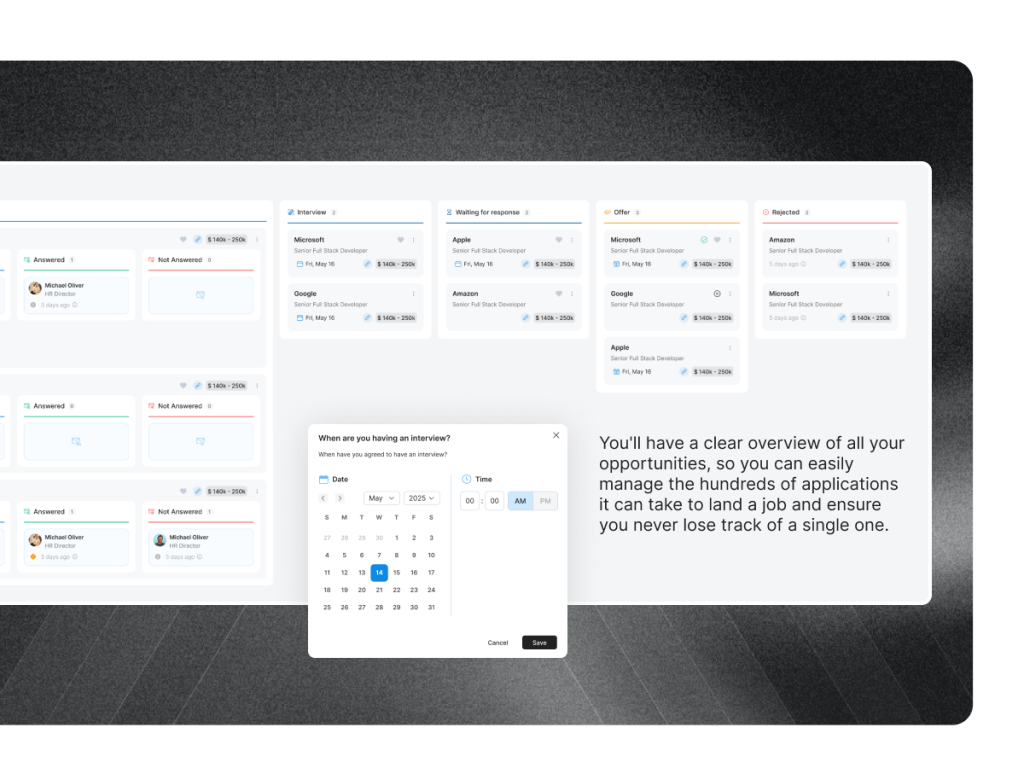
You can’t improve what you don’t measure. Top candidates treat their job search like a strategic campaign, not a series of random actions. They are no longer guessing about what’s working. Instead, they meticulously track key metrics:- Which roles they applied to and on which platforms.
- Who they’ve contacted and when they need to follow up.
- Which versions of their resume get the most responses.
- What outreach templates are generating conversations.
3. Combining speed with quality
Hiring timelines are shrinking. With fierce competition for top talent, the best roles are often filled in weeks, not months. Companies are moving faster, and you need to as well. However, speed without quality is just a faster way to get rejected. What works in 2026 is the powerful combination of speed and relevance:- Apply within 24-72 hours of a job posting. Many companies review applications on a rolling basis. The sooner you apply, the higher your chances of being seen.
- Have tailored resume templates ready to go. Create a master resume and then create several versions optimized for different types of roles you’re targeting. This allows for quick, high-quality resume optimization for each application.
- Be available and responsive. Once you’re in the process, respond to emails promptly and show flexibility for scheduling interviews.
4. Proactive and strategic interview prep
In 2026, an interview is not just a formality; it’s a pressure test. Companies want to see how you think, how you handle challenges, and how you’ll fit into their culture. Walking in unprepared is a critical mistake. Winning interview preparation strategies include:- Deep research: Go beyond the company’s homepage. Read recent press releases, check out their executives on platforms like LinkedIn, understand their competitors, and read employee reviews on sites like Glassdoor.
- Rehearse with metrics: Don’t just say you’re a team player. Prepare specific examples using the STAR method (Situation, Task, Action, Result) and quantify your achievements. “Increased sales by 15%” is far more powerful than “helped increase sales.”
- Ask insightful questions: The questions you ask are as important as the answers you give. Avoid generic questions like “What does a typical day look like?” Instead, ask strategic questions that show your insight, such as “I noticed your company launched [Product X] last quarter. What have been the biggest challenges with user adoption, and how will this role contribute to overcoming them?”
5. Following up like a human
Does a follow-up email still work? Absolutely, better than ever, in fact. But the key is to make it genuine and value-added. A generic “Just checking in” email can do more harm than good. An effective follow-up note excels when:- It directly references a specific part of your conversation.
- It reaffirms your enthusiasm for the role and the company.
- It briefly adds a new piece of value or reinforces why you are a great fit.
- It feels like something a real person would write, not an automated template.
6. Being discoverable (even when you’re not applying)
The ultimate job search scenario? The perfect opportunity comes to you. This passive approach only works if you’ve actively built a professional brand that makes you discoverable. Here’s how you can position yourself to be found by recruiters and hiring managers:- Optimize your LinkedIn profile: Treat your LinkedIn profile like a personal landing page. Use a professional headshot, write a compelling headline that includes keywords for your target role, and fill out every section with detailed, achievement-oriented descriptions. For more tips, check out Best Ways to Find a Job That Actually Work.
- Make your work visible: A resume tells, but a portfolio shows. Whether you’re a writer, designer, developer, or marketer, create an online portfolio to showcase your best work. Share it on your LinkedIn profile. Ask for recommendations from past colleagues and managers to add social proof. LinkedIn’s blog regularly features tips for getting noticed.
- Engage in your niche: You don’t need to become a full-time content creator, but being active in your professional space matters. Share interesting industry articles from sources like Harvard Business Review, comment thoughtfully on posts from leaders in your field, or participate in relevant professional groups. This consistent, low-effort activity keeps you visible and establishes you as an engaged member of your professional community.
The mindset shift that changes everything
The old way of thinking about the job search was linear and passive. It was a numbers game based on luck. The old way: Apply → Wait → Hope This approach is disempowering and leads to burnout. The new model is cyclical, proactive, and puts you firmly in control. The 2026 way: Identify → Connect → Track → Adjust → Win This is the fundamental shift that HirePilot is built for. We designed our platform to put you back in the driver’s seat of your career journey by providing the tools you need to execute a modern job search.- AI job search tools and outreach features that open doors to decision-makers.
- A comprehensive job application tracker that shows you what’s working and what’s not.
- A platform that saves you hundreds of hours on tedious tasks and keeps you sharp.
FAQ: What actually works in the 2026 job market: Job search strategies that get results
- How many jobs should I apply for each week? This is a common question, but it focuses on the wrong metric. Instead of aiming for a specific number of applications, focus on the quality. It’s better to send out 5-10 highly tailored applications per week than 50 generic ones. A targeted approach that includes personalized outreach will yield far better results. Remember, the goal isn’t to apply for the most jobs; it’s to get the most interviews. Learn how to track your search for better results.
- Is a cover letter still necessary in 2026? The answer is: it depends. Many online applications no longer require one. However, a well-written, customized cover letter can still be a powerful differentiator, especially when you can submit it directly to a hiring manager. Instead of a formal letter, consider writing a compelling “pain letter” or a personalized email that addresses the company’s specific needs.
- How important is networking if I have a strong resume? Extremely important. A strong resume might get you past the ATS, but networking gets you past the line. Many companies, such as Google, have robust employee referral programs because they know referrals are often the best source of quality hires. Your network can provide you with insider information, referrals, and direct introductions that you can’t get anywhere else. Building relationships is one of the most reliable networking strategies to uncover opportunities in the hidden job market.
- What are the biggest mistakes to avoid during interview preparation? The biggest mistake is focusing only on yourself. Great interview preparation involves understanding the company’s problems and positioning yourself as the solution. Don’t just memorize your resume; prepare stories that demonstrate your impact. Another major error is failing to prepare your own insightful questions for the interviewer. Not having questions can signal a lack of interest or critical thinking.
- Can AI job search tools really make a difference? Absolutely. The best AI job search tools act as your personal assistant. They can help with resume optimization by identifying keywords you’re missing, automate the tedious process of filling out applications, help you find the right contacts for outreach, and even draft personalized messages. For example, a tool like HirePilot can boost your application efficiency by 5x, freeing you up to focus on high-impact activities like networking and preparing for interviews.
Faster applications.
Smarter outreach.
Clearer strategy.
More interviews.