


You spend an hour tailoring your resume, writing a cover letter that actually sounds like you, and finally hit submit, only to hear nothing back. Not even an automated rejection. The job was posted three weeks ago, and somehow you found it on a Sunday night after scrolling through job boards for hours.
That silence is not random. The timing of when you apply has a measurable effect on whether a human ever reads your application at all.
The best time to apply for jobs is Tuesday through Thursday morning, between 8 a.m. and 10 a.m. in the employer's local time zone, within the first 72 hours of a job posting going live. Applications submitted in that window land when recruiters are active, inboxes are manageable, and the role is still fresh enough that hiring managers have not yet formed a mental shortlist.
Why timing matters more than you think
Most job seekers treat the application process as a lottery. Submit enough tickets and something will eventually hit. But recruiting does not work that way. A recruiter managing 30 open roles and hundreds of inbound applications makes triage decisions constantly. The first 20 or 30 applications on a posting often get the most attention simply because the role is still new and the recruiter has not yet built a mental picture of what "good" looks like.
Once that mental shortlist forms, it becomes progressively harder to displace. Applications that arrive on day 10 compete against a benchmark that was already set by day three. Even if your resume is objectively stronger, the recruiter is now comparing against memory rather than a blank slate.
There is also a structural reason timing matters: applicant tracking systems surface candidates in chronological order by default in many configurations. Being early does not guarantee anything, but being late almost guarantees you are buried.
When is the best time to apply for a job during the week
Weekday mornings consistently outperform afternoons, evenings, and weekends, a pattern that lines up with labor market and job seeking behavior data from LinkedIn's Economic Graph. Tuesday, Wednesday, and Thursday are the peak performance window. Monday mornings tend to be consumed by internal meetings, email catch-up, and planning. Friday afternoons are when attention is already drifting toward the weekend.
The logic is simple: you want your application to appear in a recruiter's queue at the moment they are most likely to be doing active sourcing work. That tends to happen Tuesday through Thursday, before the mid-afternoon task-switching that comes with afternoon meetings.
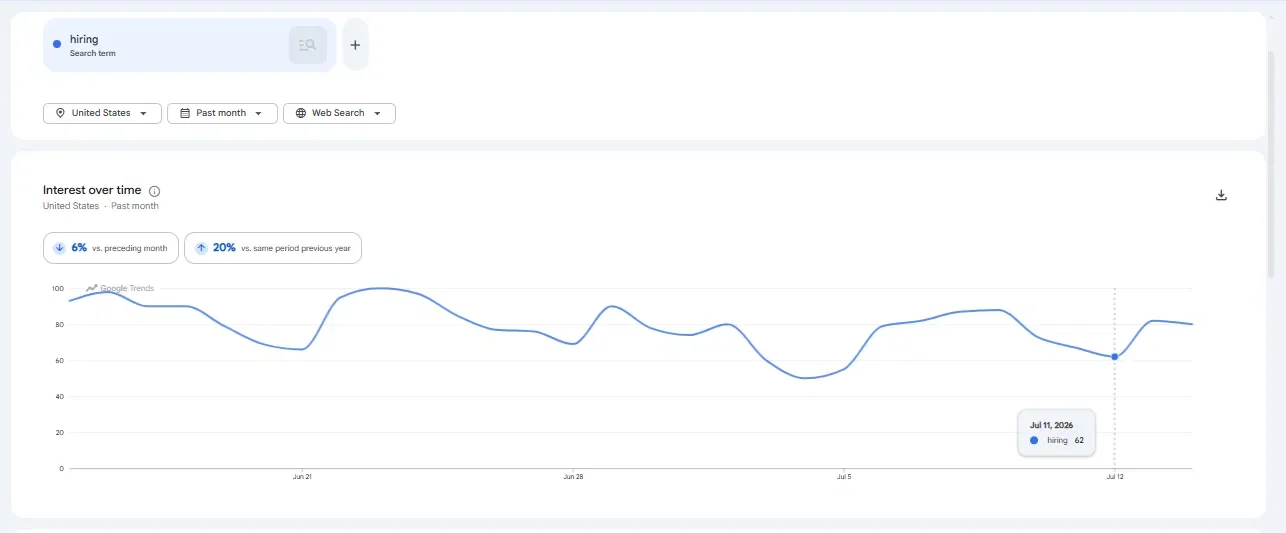
Submitting on a Saturday or Sunday does not kill your chances, but it does mean your application arrives in a batch that gets reviewed Monday morning alongside everything else from the weekend. Search interest in hiring-related terms follows the same rhythm, consistently dipping over the weekend and climbing again by Monday.
Best time of year to apply for jobs
The calendar matters as much as the day of the week. Two windows tend to produce the most hiring activity: January through March, and September through October.
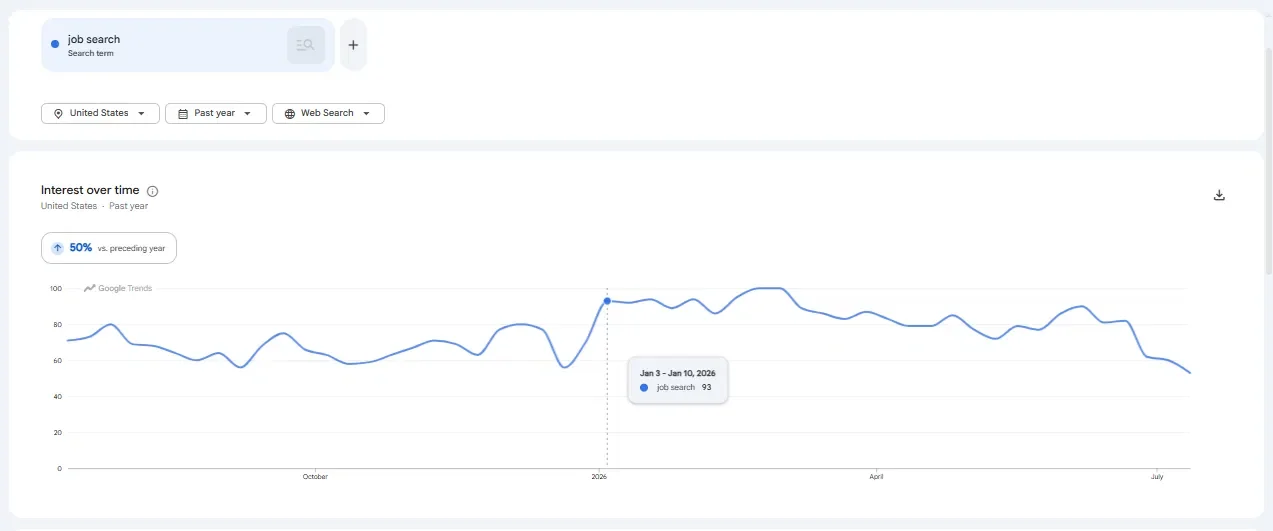
The January surge happens because budgets reset, a seasonal pattern that shows up clearly in monthly job openings data from the Bureau of Labor Statistics. Headcount approvals that were held until fiscal year close suddenly get released. Companies that paused hiring in December start posting aggressively in the first weeks of the new year. Candidate behavior mirrors this shift precisely: search interest for job search bottomed out in the final week of December before surging to its highest point of the year during the week of January 3 to 10, up 50 percent year over year.
Candidates who had their resumes polished and ready before January 1 have a meaningful advantage over those who start their search after the holiday haze clears.
The September and October window mirrors this logic. Summer tends to slow things down as decision-makers take time off and interview panels are harder to assemble. By early September, most organizations are back at full capacity and trying to fill roles before year-end freeze periods kick in around November and December.
The slowest periods are late November through December and the stretch around major summer holidays. That does not mean you should stop applying entirely, but your response rates will be lower and timelines will stretch.
What about the worst times to apply
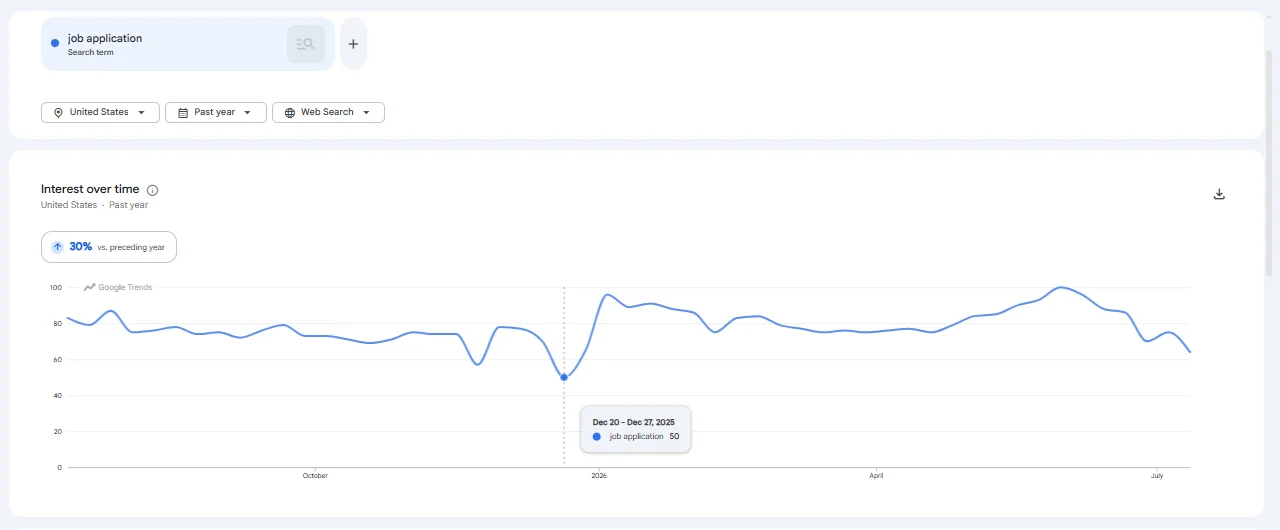
There are a few specific windows that consistently produce poor results. The week between Christmas and New Year's Day is near-dead for most industries. Search interest for job application confirms this directly, dropping to its lowest point of the year during the week of December 20 to 27, roughly half its typical level, before rebounding sharply once January began.
Many companies enter a soft hiring freeze as budgets are uncertain and decision-makers are unavailable. Applications submitted during this window often sit untouched for two to three weeks.
Late August can be similarly sluggish as executives return from summer vacations and organizations reset before the fall push. If you apply heavily during these lulls, you are not wasting the effort entirely, but set your expectations accordingly and follow up proactively once the calendar moves past those quiet periods.
When is the best time to apply for jobs relative to the posting date
Day one matters enormously. Data from recruiting platforms consistently shows that the application-to-interview conversion rate drops significantly after the first week a job is posted. The reason is both psychological and logistical: recruiters often begin phone screens within days of posting, and roles sometimes get filled before the official close date is ever reached.
If you see a posting go live and it matches your background, apply the same day. Do not wait until the weekend when you have more time to perfect the materials. A good-enough application on day one beats a perfect application on day seven more often than most candidates realize.
Following up after submitting your application is the second move that separates active job seekers from passive ones. A brief, professional note to the hiring manager or recruiter sent three to five business days after applying keeps you visible without being aggressive. Most candidates never follow up at all, which means the bar for standing out is actually quite low.
How to actually find jobs fast enough to apply early
The timing advantage only works if you know about postings quickly. Most job seekers are checking boards manually, which means they are often seeing roles two or three days after they went live. By that point, the early window has already closed.
Setting up automated job alerts on LinkedIn, Indeed, and niche boards is the baseline. But alerts alone are not enough if you are then spending time sorting through irrelevant postings, switching between tabs, and re-entering your information on every application form.
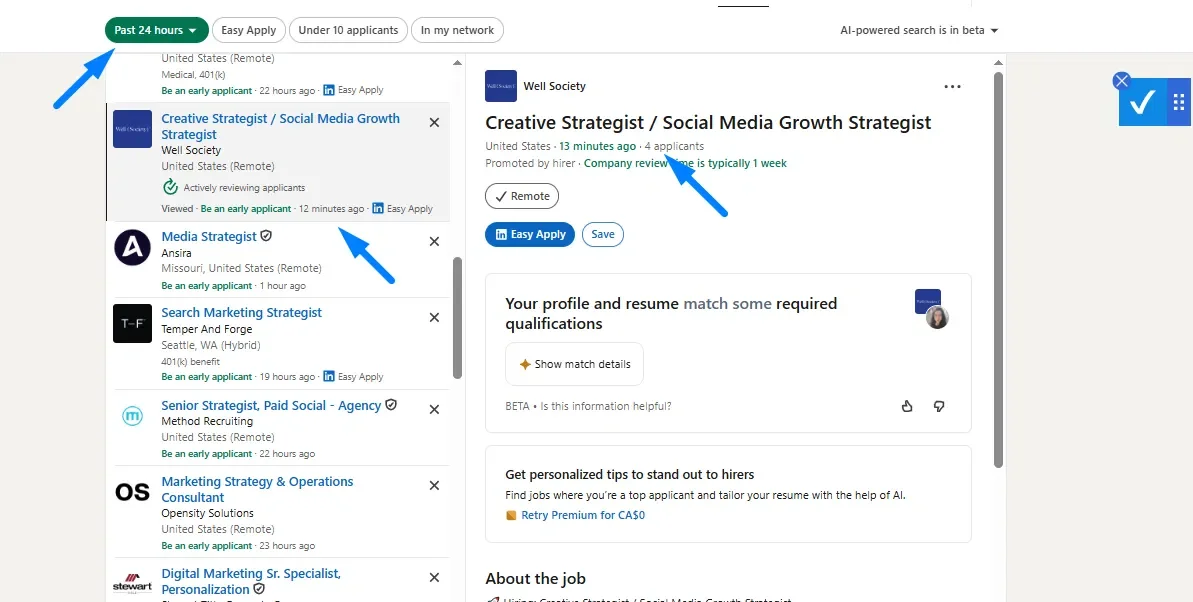
Automating your job search can cut the lag between spotting a relevant posting and having your application submitted from hours to minutes. When your materials are pre-loaded and your workflow is optimized, you can realistically apply within the first few hours of a role going live rather than circling back to it days later.
The application volume trap
Timing also interacts with volume. Many job seekers respond to a slow response rate by applying to more jobs, often by casting a wider net and submitting faster, lower-quality applications. This creates a paradox: the effort to compensate for bad timing leads to habits that further reduce response rates.
A targeted, well-timed application beats a spray-and-pray approach almost every time. Fifty applications submitted at random hours over three weeks will typically generate fewer responses than 15 well-timed applications submitted within the first 48 hours of posting, with personalized materials.
The goal is not to apply to as many jobs as possible. The goal is to get your application in front of a human before the mental shortlist forms and to look like the right candidate when it lands.
Tools that help you apply faster without sacrificing quality
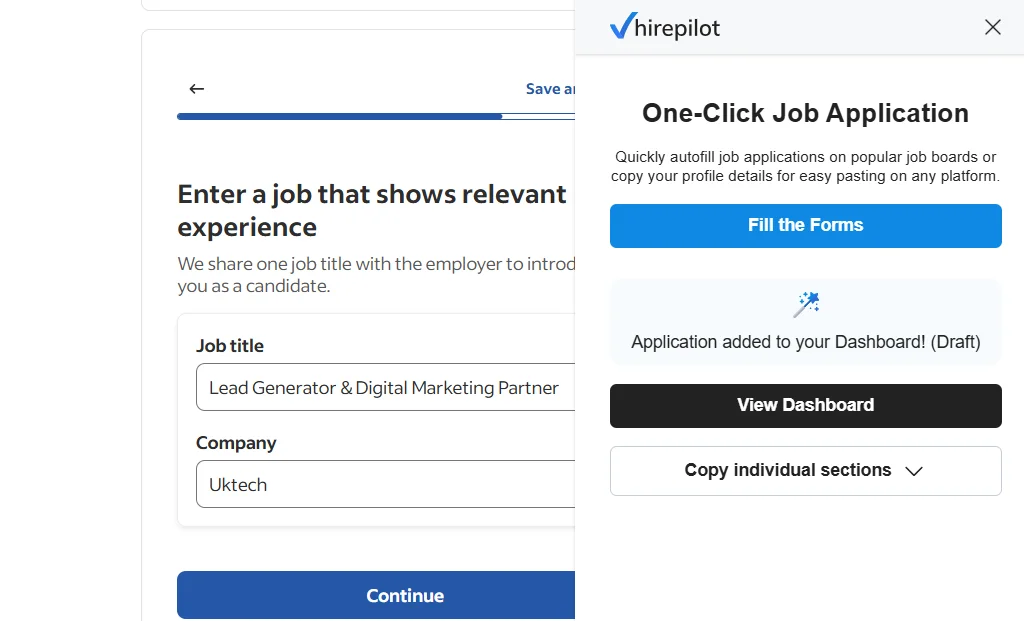
The friction between "I want to apply now" and "this form is going to take me 20 minutes" is real. Applicant tracking systems like Workday and Greenhouse require manual re-entry of information that is already on your resume. Screening questions add another layer. By the time you finish one application, you have lost the window for two others.
HirePilot's autofill feature works across LinkedIn Easy Apply, Indeed, and Workday, filling forms automatically, including screening questions, so the time between finding a role and submitting your application collapses. The job tracker automatically saves your applications as you submit them through autofill, so you always have a clear picture of where you stand and what needs follow-up. You are not choosing between speed and accuracy, you are getting both.
The real competition is not other applicants
Here is something most job search advice misses entirely: your competition for recruiter attention is not primarily other candidates. It is the recruiter's internal urgency.
Recruiters operate under hiring timelines set by hiring managers who are already feeling the pressure of an unfilled seat. When a role is first posted, that urgency is highest. The recruiter is motivated to move fast, which means qualified applications get acted on quickly. As weeks pass, urgency can actually drop, because the hiring manager has adjusted to the vacancy, started leaning on the team to cover the work, or quietly deprioritized the role.
This means the timing window where your application has the most leverage is not just when the pool is smallest, it is when the internal energy to fill the role is at its peak. An application that arrives in week three is swimming against a current that did not exist in week one. Apply early not just because there are fewer competitors, but because you are aligning with the moment of maximum internal motivation to hire.
Getting in front of the hiring manager directly
Even a perfectly timed application can stall if it never makes it past the ATS or the first recruiter screen. The companies that hire fastest are often the ones where a hiring manager had already heard the candidate's name before reviewing the application.
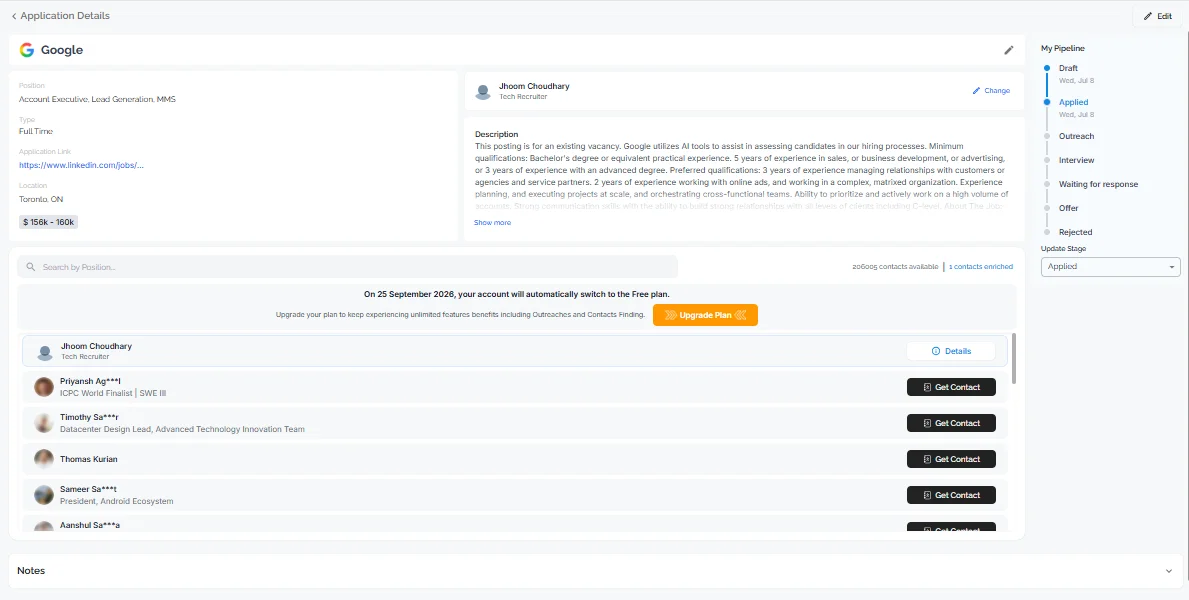
That is not a coincidence. It is a result of direct outreach. Finding the hiring manager for a job and sending a personalized message on the same day you apply creates a second channel of visibility that most applicants ignore entirely. It does not need to be aggressive or salesy. A brief message that demonstrates you understand the role and have something specific to offer is enough to make you memorable.
HirePilot's recruiter outreach feature is built specifically for this. It identifies the hiring manager and generates a personalized AI-powered message you can send the same day, so you are not just in the ATS queue, you are already a name the hiring manager has seen.
"We built the outreach feature after watching users apply to the same jobs as everyone else and get no response. The application alone was never the problem. The problem was invisibility. When someone sends a direct message to the hiring manager on the day they apply, the callback rate changes meaningfully. That pattern showed up across users in completely different industries." Viktor Shumylo, co-founder, HirePilot
Putting it all together: a timing strategy that actually works
The best approach combines day-of-week timing, seasonal awareness, posting-freshness sensitivity, and direct outreach into one system rather than treating each as a separate variable.
Check your job alerts first thing Tuesday through Thursday mornings. When a relevant role appears, apply within hours, not days. Use tools that eliminate form-filling friction so speed does not require cutting corners on quality. Send a direct message to the hiring manager the same day. Set a calendar reminder to follow up five business days later if you have not heard anything.
That sequence, repeated consistently across the right postings, is what produces a response rate that feels like progress rather than silence.
FAQ
When is the best time to apply for a job?
The best time to apply for a job is Tuesday through Thursday morning, between 8 a.m. and 10 a.m. in the employer's time zone, within the first 72 hours of the posting going live. This timing puts your application in front of recruiters when they are most active and before a mental shortlist has formed.
When is the best time to apply for jobs during the week?
Tuesday, Wednesday, and Thursday consistently outperform Monday and Friday for application response rates. Monday mornings are consumed by internal meetings and catch-up tasks, while Friday afternoons see reduced recruiter focus. Midweek mornings hit the window when sourcing and review work is most likely to happen.
Best time of year to apply for jobs: which seasons are strongest?
January through March and September through October are the two strongest hiring windows. Budget resets in January trigger a surge in new postings, and the fall window reflects organizations trying to close roles before year-end. Late November through December and the period around major summer holidays tend to see the slowest hiring activity.
Does it matter how quickly you apply after a job is posted?
Applying within the first 48 to 72 hours of a posting going live has a measurable impact on response rates. Recruiters often begin phone screens within days, and roles can be filled before the official close date. Early applicants also benefit from being reviewed before a benchmark candidate has already shaped the recruiter's expectations.
Best times to apply for jobs: does the time of day really make a difference?
Yes, the time of day matters alongside the day of the week. Applications submitted between 8 a.m. and 10 a.m. local time are more likely to be reviewed promptly because they arrive when recruiters are starting their active sourcing work. Applications submitted late in the afternoon or in the evening may sit overnight and land in a larger batch reviewed the following morning.
Find your next job faster - without the chaos
Spend minutes, not hours, on applications. Stay organized, follow up confidently, and get noticed sooner.
Share this article

Viktor Shumylo
Viktor Shumylo is the co-founder of HirePilot, an AI-powered job search platform. He has 10+ years of experience building SaaS products and tools that help job seekers optimize resumes, streamline applications, and land interviews faster.
More articles by Viktor Shumylo